A Lesson in Self Discipline

27 08 2015

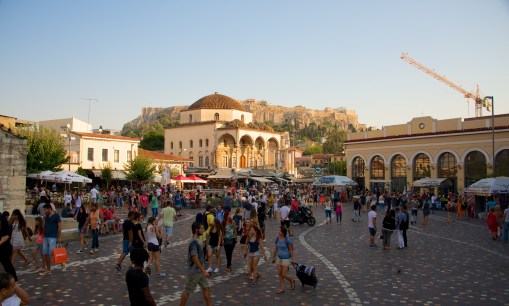
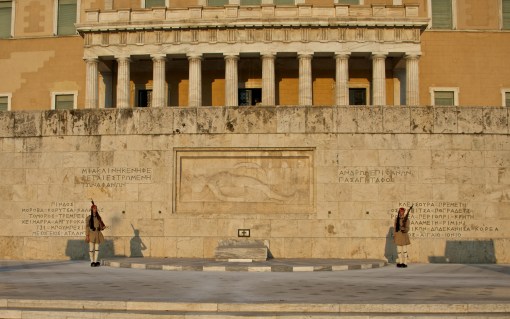
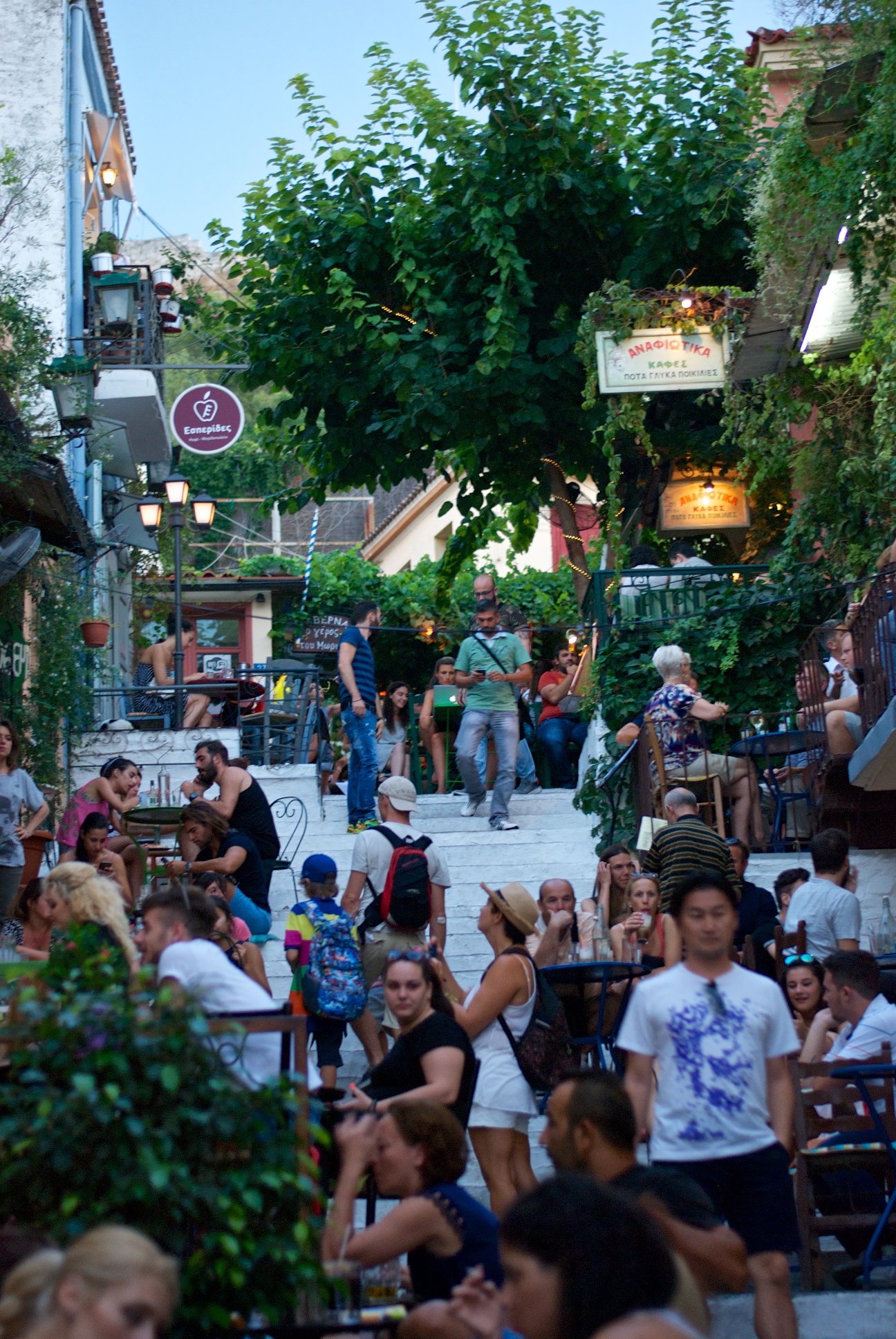
For our last night in Athens, we meandered through the streets of the Plaka, past the tourist shops selling ouzo, olives and breezy cotton dresses, through Monastiraki Square and up Ermou Street – Athen’s best known and busiest shopping street – to find ourselves at Syntagma Square, the central square of Athens, and finally at the Parliament Building to visit the Tomb of the Unknown Soldier.

Photo 8

Monastiraki Square

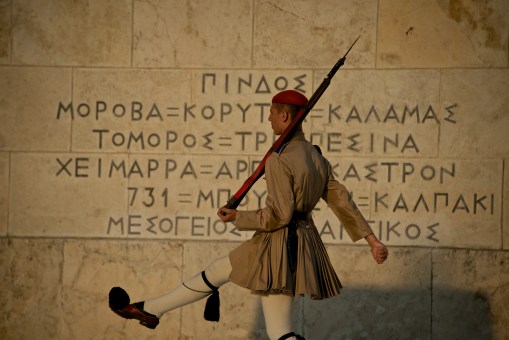
The Greek Tomb of the Unknown Soldier is guarded around the clock and we spent about 15 minutes watching the Evzones, members of the Presidential Guard.  With the exception of switching positions with each other every 15 minutes, the guards remain completely motionless and at attention during their one hour of sentry duty.  Every hour on the hour they have a ‘little change’ where the two incoming and two outgoing sentries exchange places.  But every Sunday at 11AM is when the ‘Grand Change’ takes place, which involves the whole Guard with its officers and a military band.

Photo 4 (1)

Photo 1 (1)

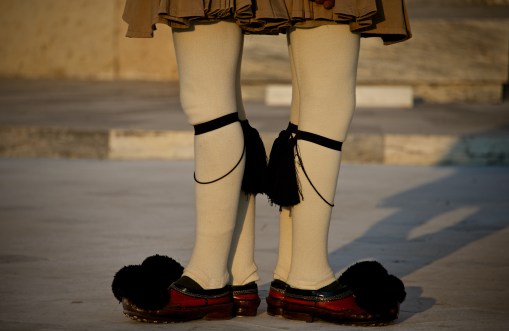
As I watched their slow and highly stylized movements as they switched positions, I spent some time really looking at their uniforms.  For one, I loved their shoes.  They were pretty cute with pom poms on them, and although they looked pretty light and fluffy these tsarouchi clogs actually have 60 – 120 nails under the sole and weigh 7.7 lbs/3.5 kilos.

Photo 6 (1)

They’ve got to have some pretty strong legs and amazing discipline to complete their stylized movements in tandem while wearing two sets of white woolen stockings, garters, and a cotton kilt and waistcoat, without wiping away the sweat that was surely soaking into their uniform.  It was high 80’s in temperature at 6PM and as I watched these soldiers stand guard in the setting sun, I could feel a drip of sweat easing its way down the center of my back. It’s a feeling that stands out in my memory and I definitely did not have the self restraint not to press my dress into the small of my back to try to absorb that drop.

Photo 5 (1)

While I was planning our trip to Greece I heard a lot of people say that there wasn’t a lot to do or see in Athens, and that we should not spend too long there.  Those opinions kind of shaped our trip and so I had set aside a day and a half for Athens.  But I don’t think I took into account our jet lag, the heat, or our need for an afternoon nap.  So, although we saw a lot while we were in Athens, and I’m glad we made it a point to see these amazing Evzones, I think I could have used one more day to satisfy my curiosity and my sense of sightseeing accomplishment.

Photo


Athens Treasures

26 08 2015

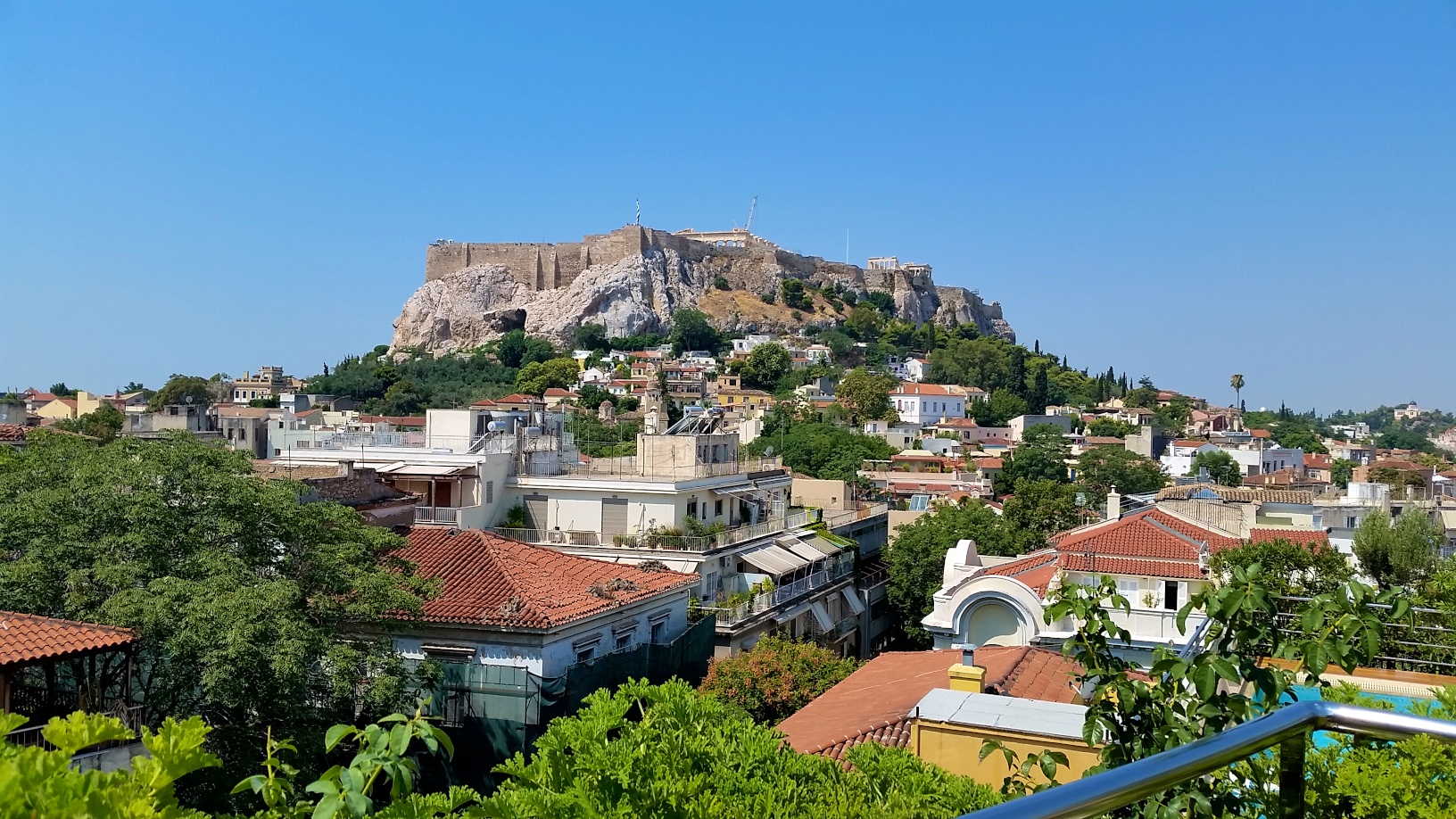
Part of the reason why I chose to stay at The Electra Palace Hotel in the Plaka District was the rooftop views of The Acropolis it boasted on its website.  I imagined afternoons spent frolicking in the pool, perhaps enjoying a tropical drink, and looking off to the distance to see this iconic view.

Photo

Well, perhaps I should have planned longer than a day and a half in Athens if I wanted to make those daydreams come to life.

Instead, I found myself enjoying the rooftop terrace in an unexpected, and much more intimate way.

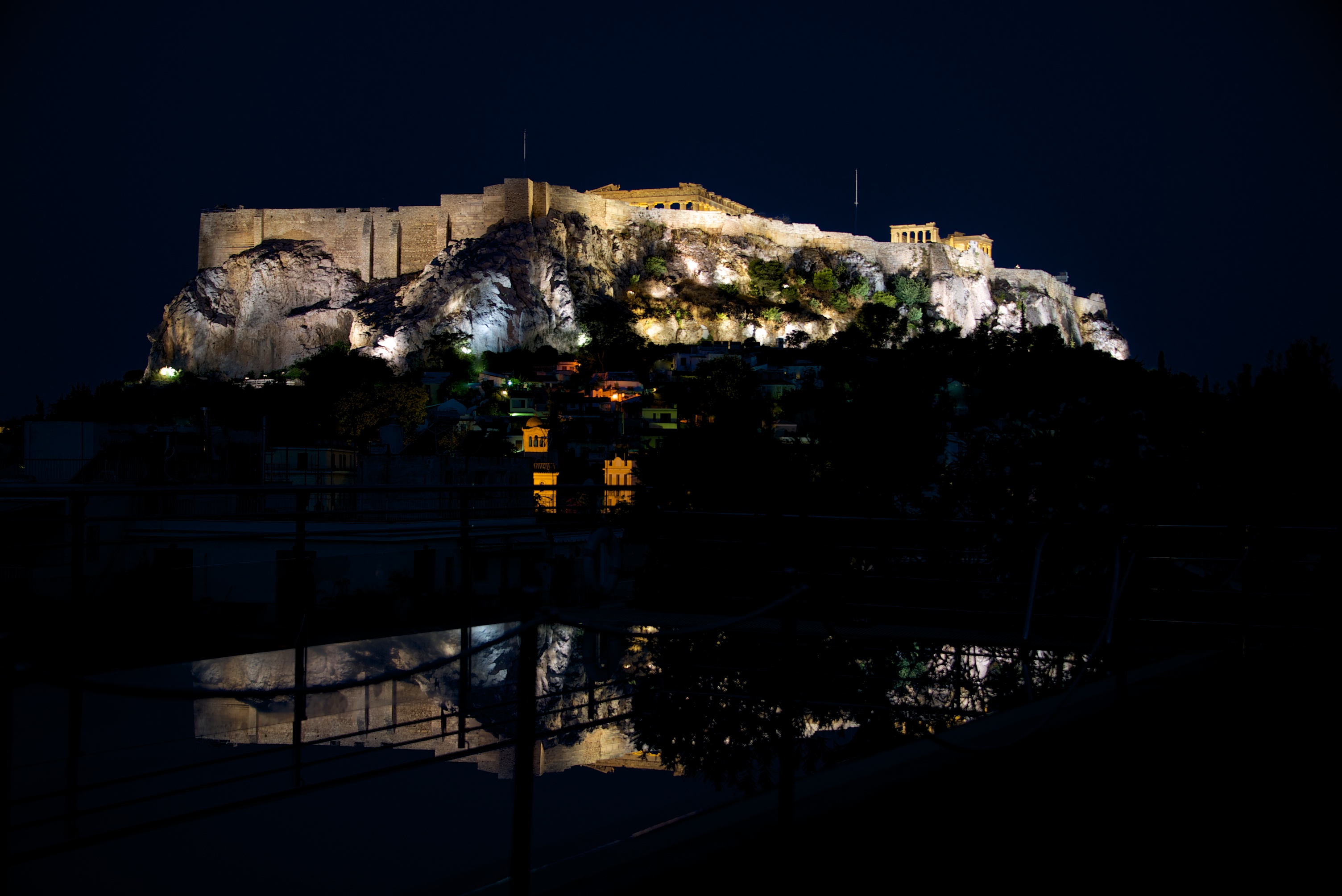
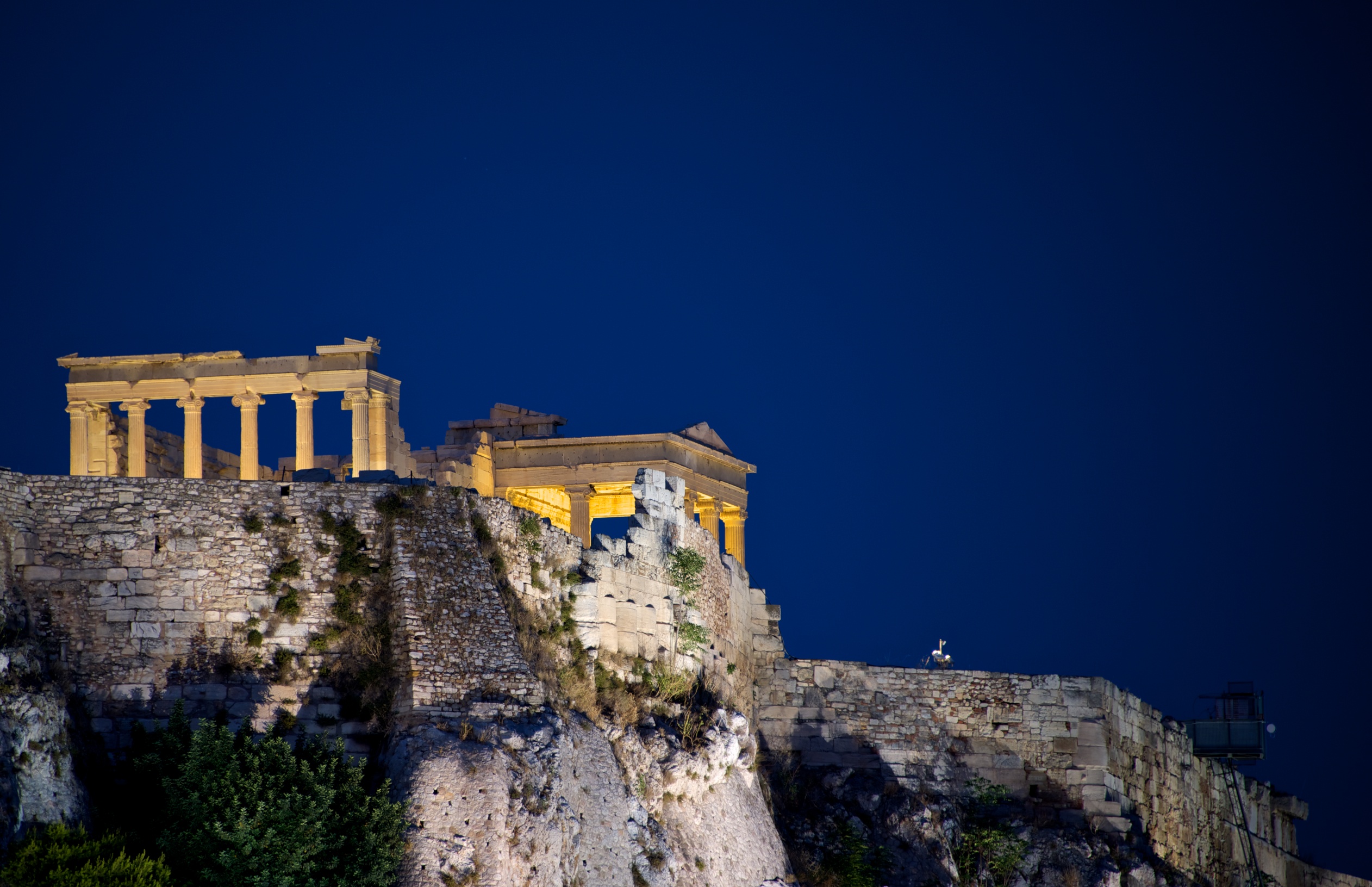
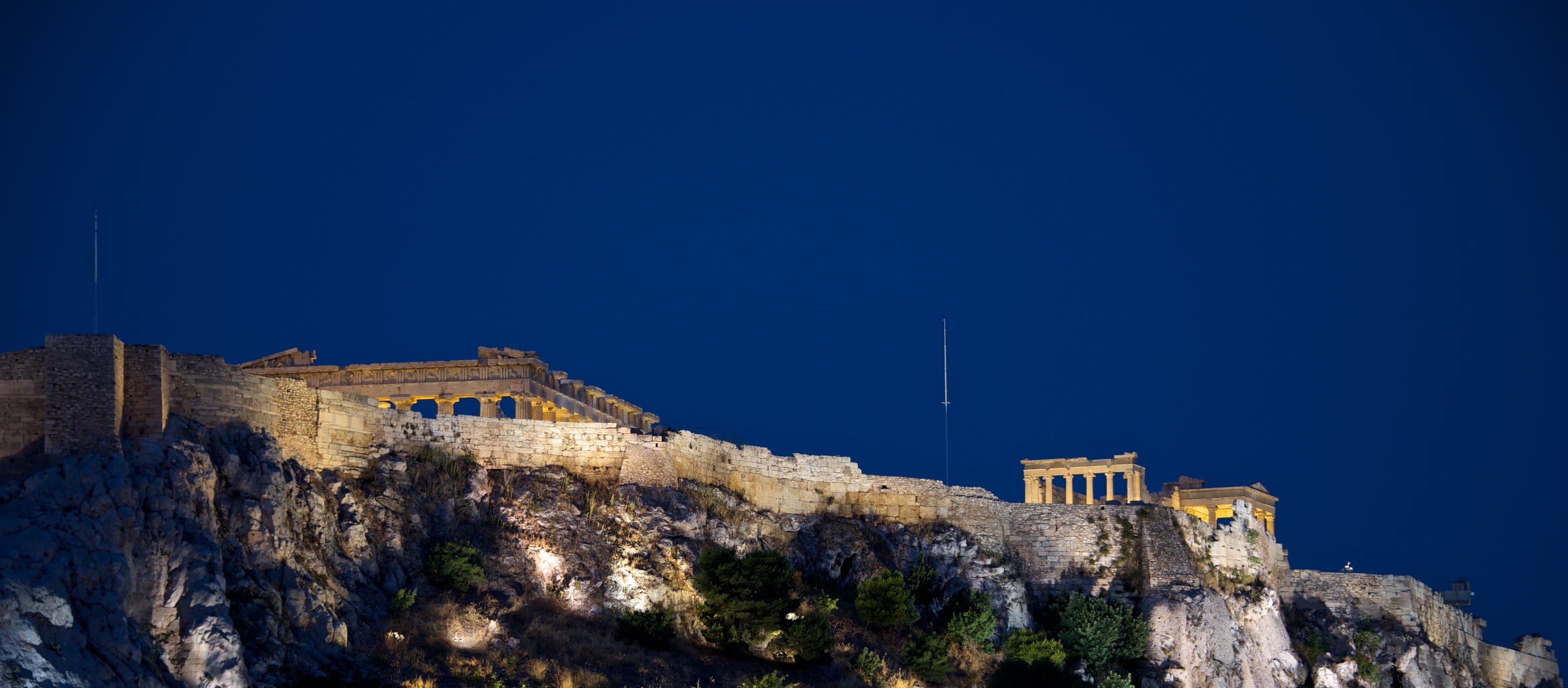
Jetlag had me up at 5:30AM the first morning and the excitement of a new place and all of the potential had me jumping out of bed, throwing on some clothes and taking a peek outside.  Just what I thought – The Acropolis was all lit up!

I wasn’t sure if the rooftop terrace would be accessible that early in the morning, but it turns out that it is and I had it ALL to myself.

Just me and the Acropolis, having a little photo shoot!

Photo 1

Photo 2
Photo 25

Photo 24

After I finished up with my alone time with the Acropolis, and we marched through the city looking for a camera store to replace a polarized filter (a casualty from a fall on my BFF The Acropolis and the second replacement in less than 2 months) we finally got back to the business of exploring the city and a couple little ancient ruins.

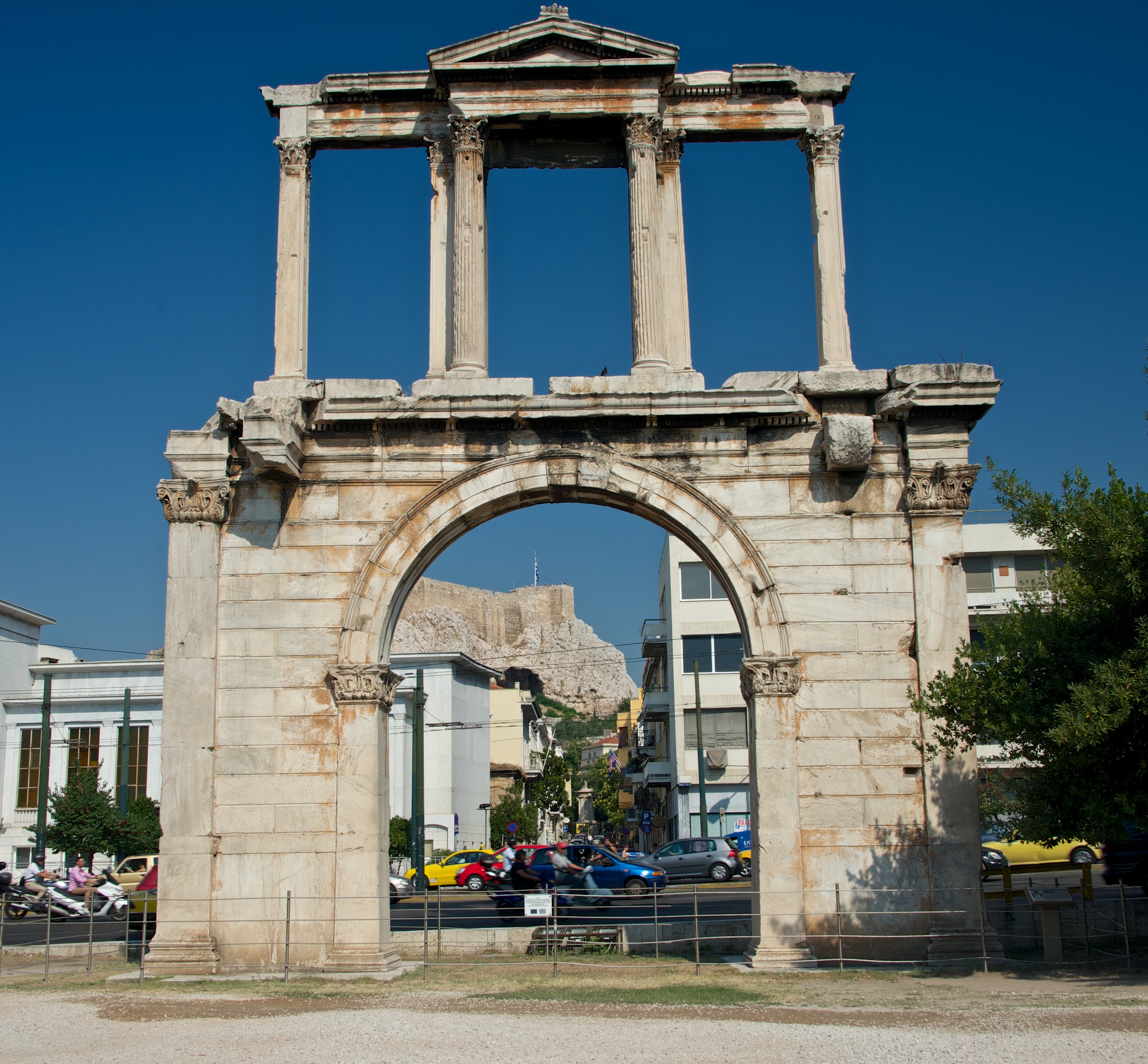
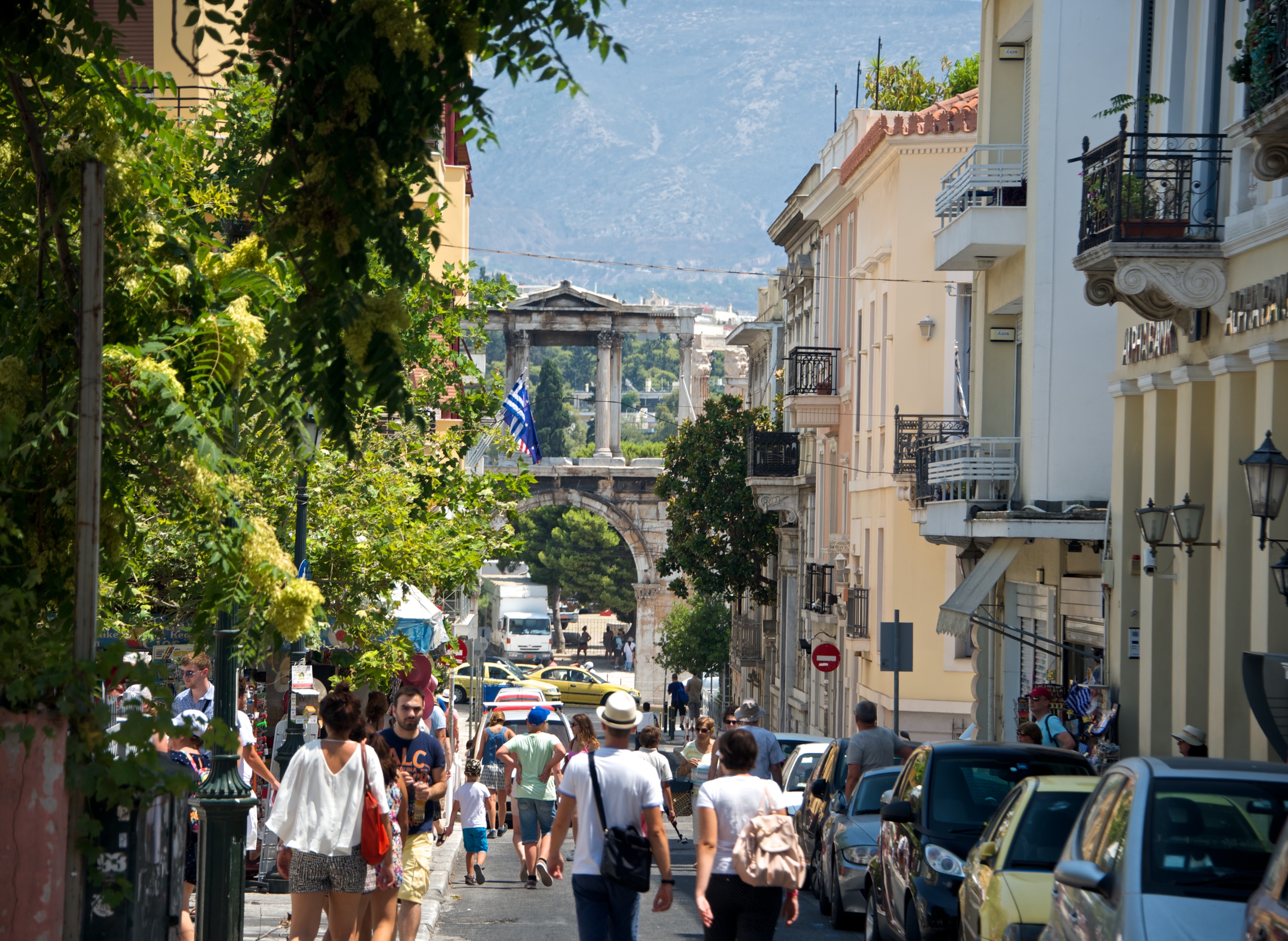
Hadrian’s Arch was built by the Athenians, in 131 AD, in honour of Emperor Hadrian.  The monument is built of Pentelic marble and bears two inscriptions.  One inscription, facing west towards the Acropolis and the old town says, “This is Athens, the city of Theseus”.  The other inscription, facing east says “This is the city of Hadrian, not Theseus”.  

Photo 3

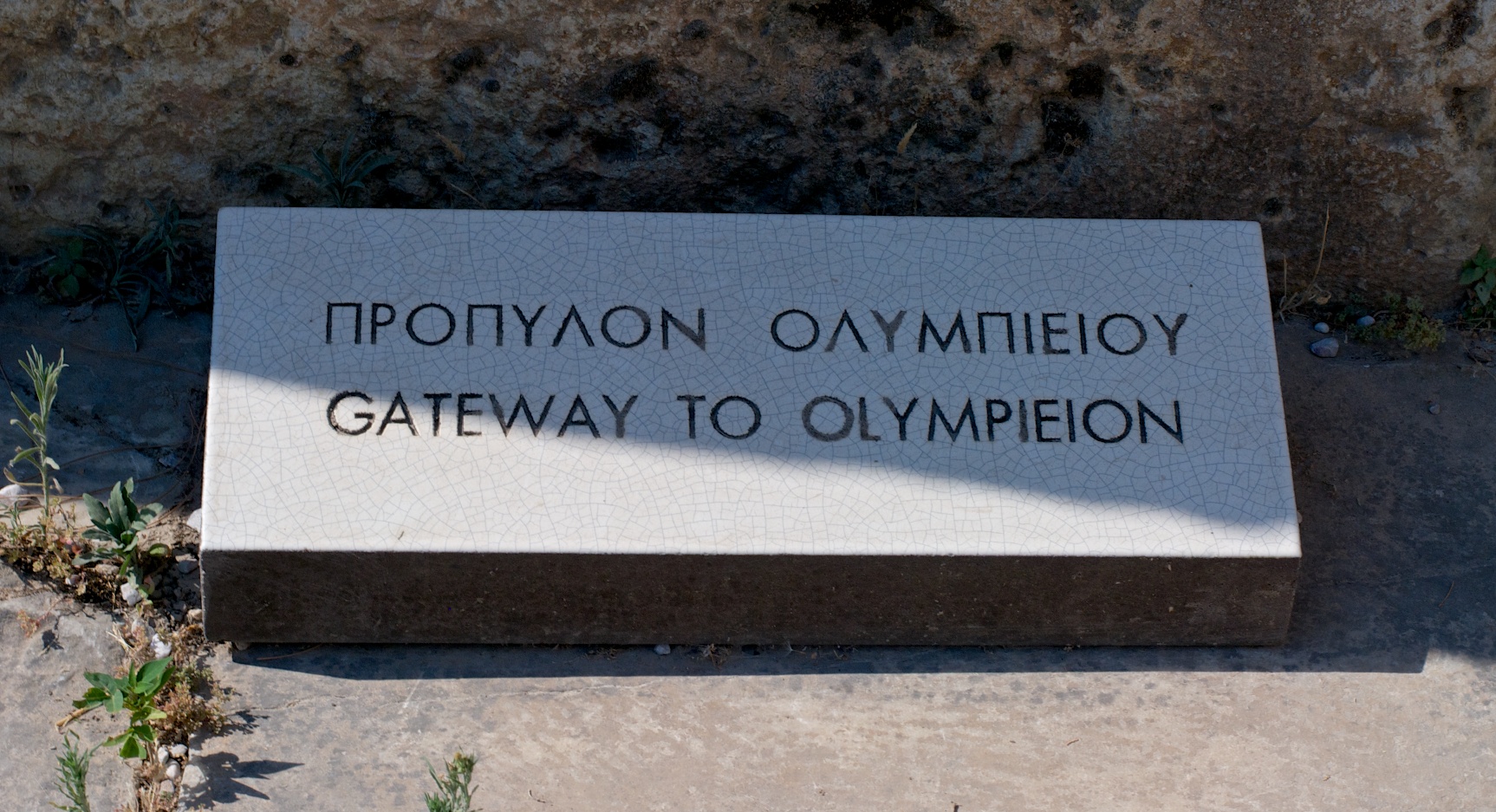
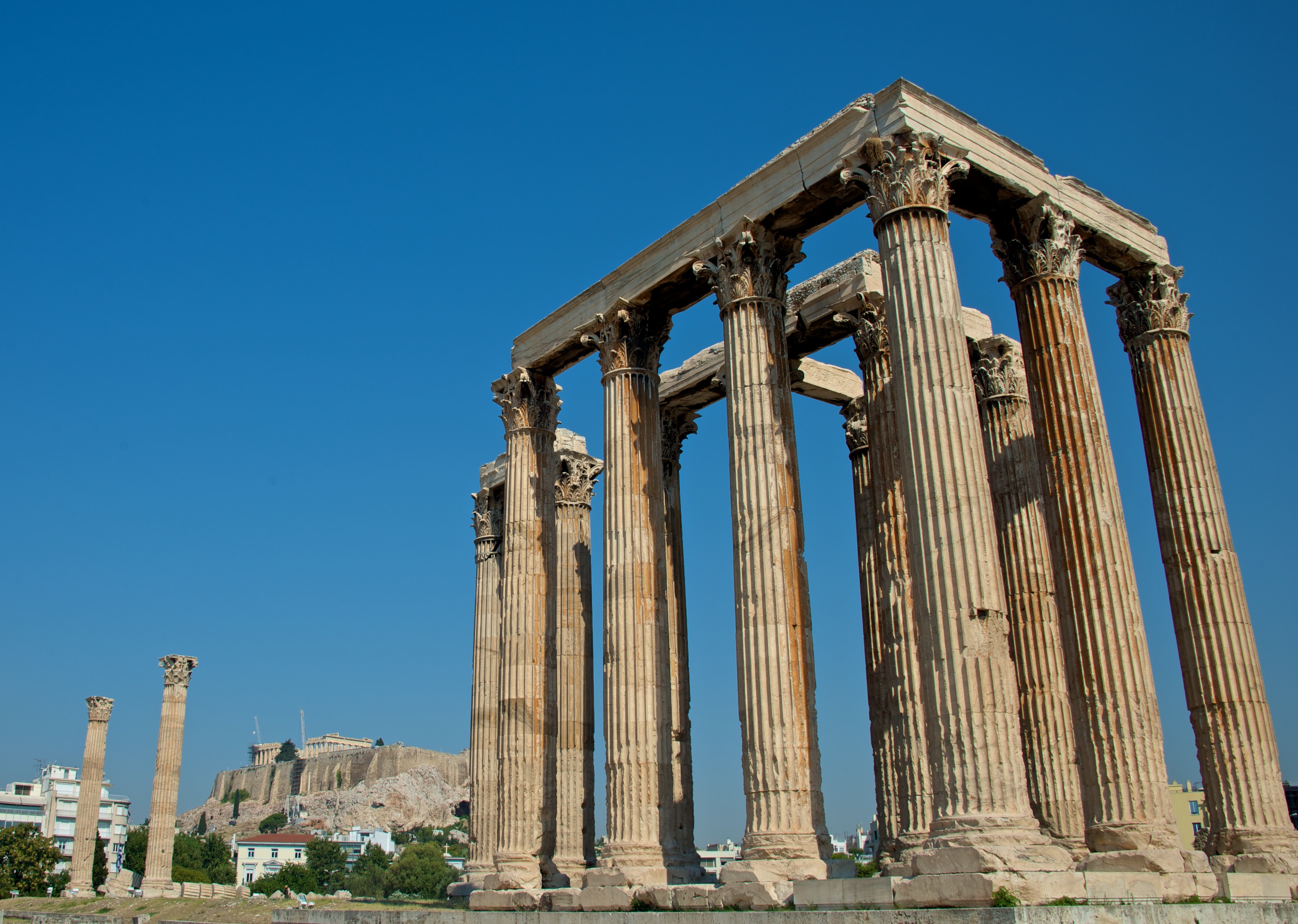
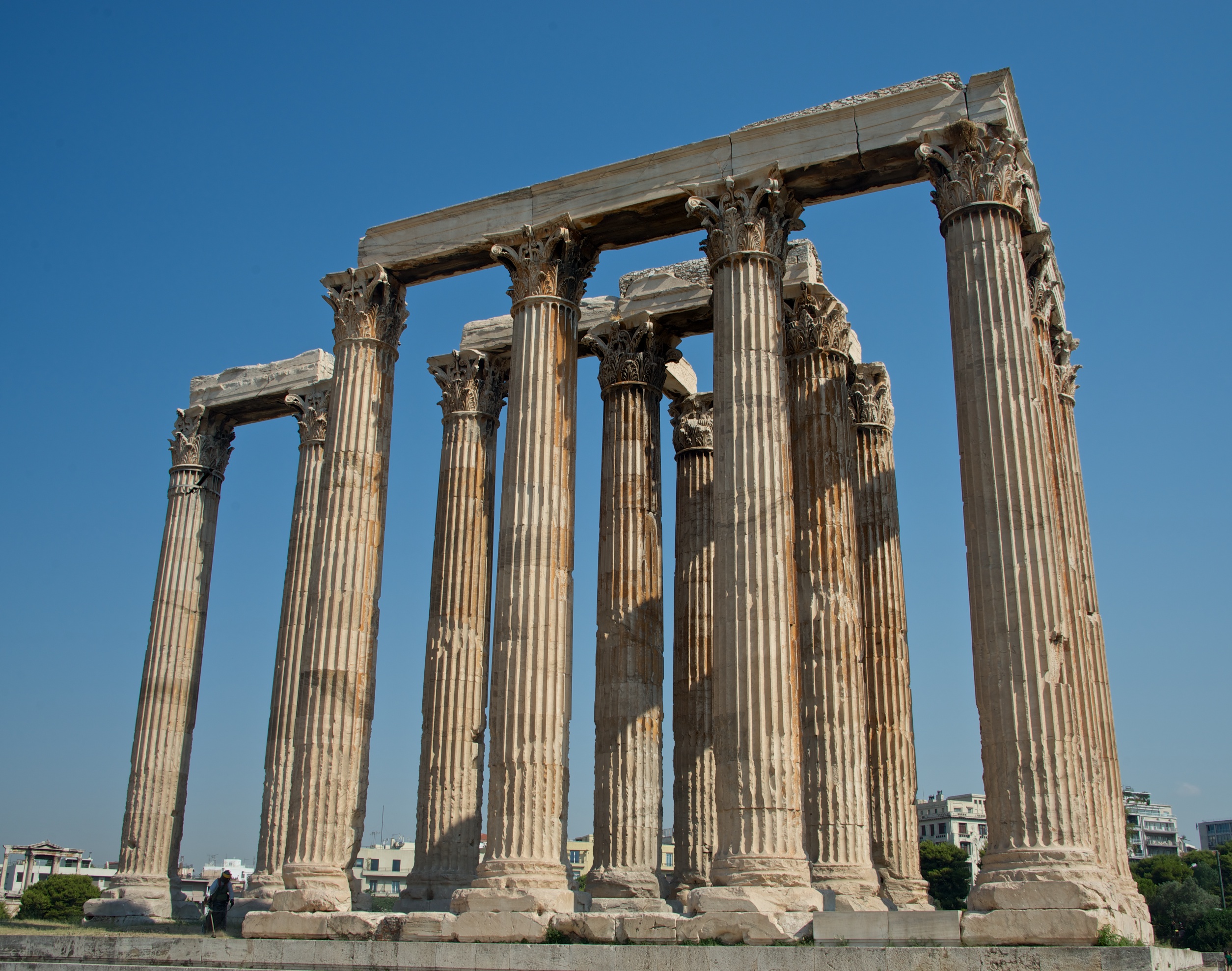
Hadrian’s Arch was built after The Olympieion, which includes the Temple of Olympian Zeus, Roman baths, classical houses as well as a section of the ancient city’s fortification wall.

Photo 3 (1)

Photo 4
Photo 6

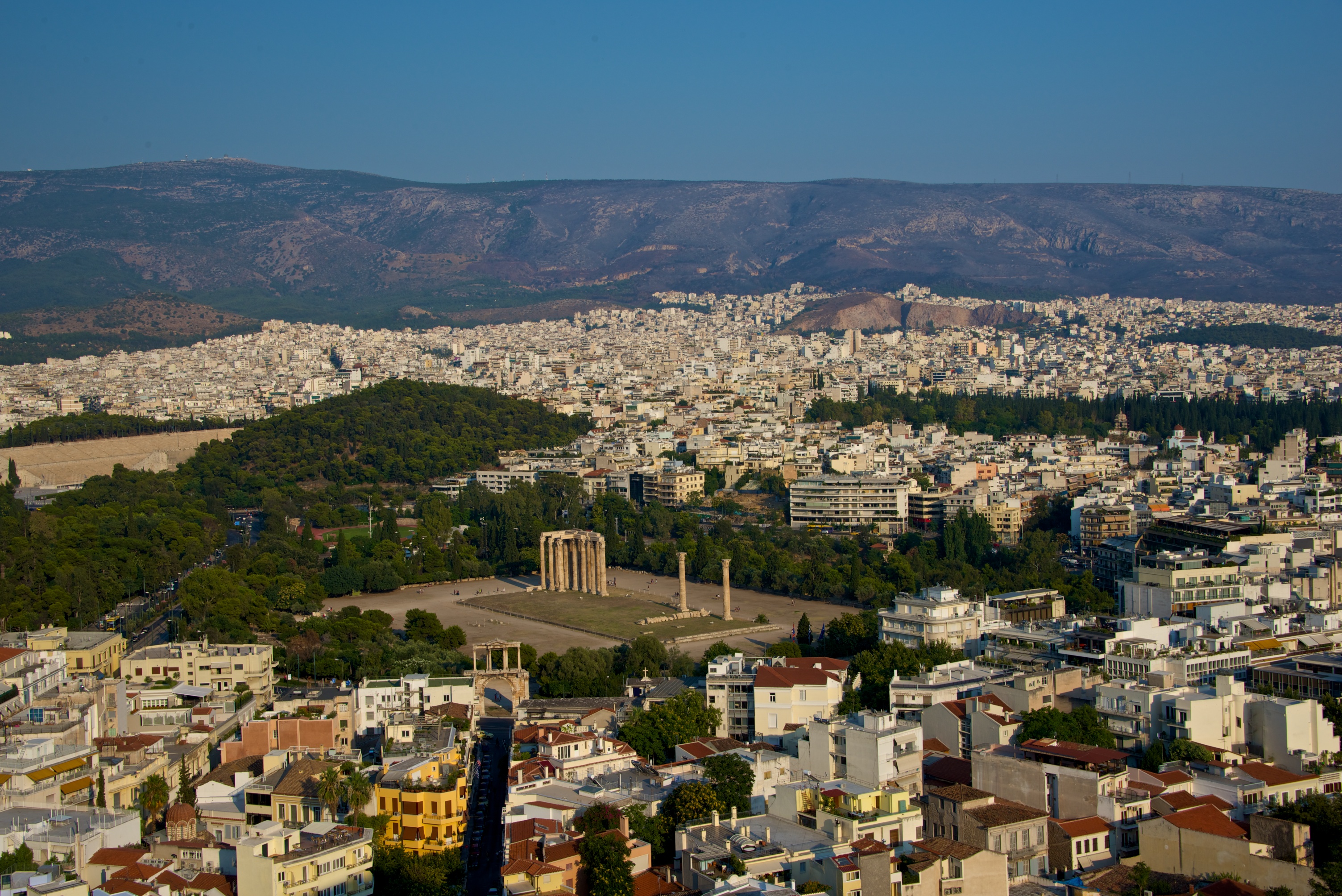
View of Hadian’s Arch and the Temple of Zeus from The Acropolis

At about 11AM the heat was starting to get a little bit much and we headed indoors to explore The New Acropolis Museum.  It’s been said that construction for this museum was being protested by the ancient Greek gods.  After many protests and delays, work finally started and an ancient urban development was unearthed from the ground dug up for the foundations – construction was immediately halted.  Finally a design was created to build the museum in a way that the ancient site would be preserved and open to view.

When we approached the museum, we thought that it was the coolest thing that they had built the museum overtop of these ancient ruins and showcased them with an opening at the entrance and glass floors.  We hadn’t realized that this unique feature of the museum was not part of the original plans.

Entrance to the New Acropolis Museum is 5 euro and in my opinion, it was worth it.

Photo 7

Photo (1)

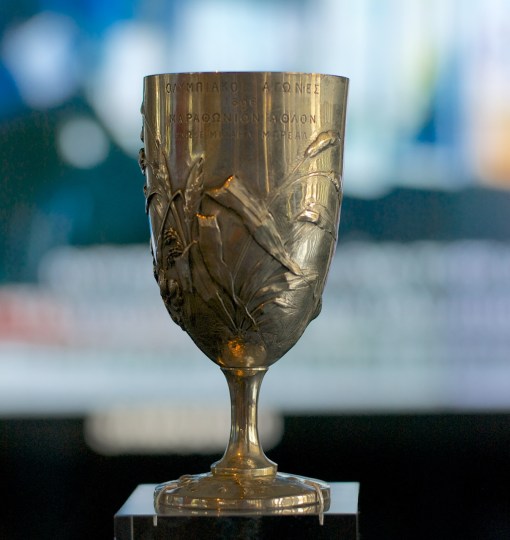
Right before we left the museum we saw this small silver cup encased in glass and a video playing.  This was the trophy won by the Greek Marathon winner, Spyros Louis, in the first modern Olympic Games.  He was the only Greek athlete to win at the 1896 Olympic Games in Athens.  As he approached the stadium to win the Marathon race, people yelled, ‘He’s GREEEEK’, and the crowd went wild!

The marathon created for the 1896 Games was inspired by the legendary run of Pheidippides, a Greek messenger, who ran from the battlefield of Marathon to Athens to bring the news of victory by the ancient Greeks in their battle over the Persians.  He died moments after delivering the message of victory after running the 25 miles/40 km distance – and there you have the historical roots of the Marathon.

When the Breal’s Silver Cup was displayed at the museum in 2012, this was the first time it had been displayed in Greece.

Photo 2 (1)


The Sacred Rock: The Acropolis

19 08 2015

There is a lot of pressure when you are the sole trip planner.  Sure, it’s nice to get that pat on the back if you bring your travel companions to the perfect view at sunset, or the best kept secret restaurant in the city, or if you just have THE BEST time ever.  But what happens if things don’t go according to plan, if your sources turn out to be full of shit, or perhaps you failed to notice that the site was last updated in 2012?  Well either way, I felt a lot of pressure on this trip.  I felt like we couldn’t truly ‘wing it’ to see the sights effectively, nor did I want to overfill our itinerary, and I definitely wanted to see what we could do to avoid getting caught up in a sea of cruise ship tours.  (get it ‘sea of cruise ships tours’ – HA).

I tried to ask Nathan’s opinion on a few things: do we go to the Acropolis first thing in the morning when it opens at 8AM or at the end of the day when the heat is dying down and the cruise ships are gone…. Little response.  Private tour or bus tour? what’s the price difference.  Ferry ride or flight to the islands? What’s our timeline again? I tried to show Nathan photos a couple of nights before we left, and he said ‘NO – I don’t want to see anything.  I want to be surprised.’

So there you have it.  The fate of our trip rests on my shoulders.

And so, after our 3 hour nap and a cup of mango and lemon gelato, we are off to The Acropolis.  At the end of the day.  It was still really hot.  But the light for photographs was what won me over.  First decision made.
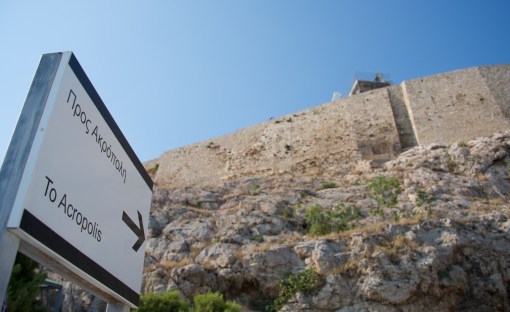
Photo 8

The Acropolis is Greece’s most emblematic monument, the sacred rock, an ancient citadel on a flat-topped rock that rises 490 feet above sea level from the heart of the city.  It is a compass that you look to to orient yourself in the city, and it may involve you walking round and round and round trying to figure out where you started and which way to go now.  But, regardless of user error – you can see it from pretty much anywhere.

After hours spent looking at the names of the different ancient sites and monuments on the computer before our trip, it all seemed a little overwhelming.  I was worried that there was a certain order to view the sites and a best view point for photos.  But once we started the trek up the dusty path, I began to realize that it really doesn’t matter.  Every ancient structure is impressive and it is mind boggling that people have been ascending this sacred rock for over 6000 years, and it just gets better and better the further you climb.

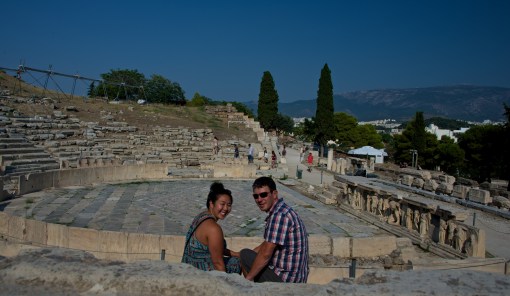
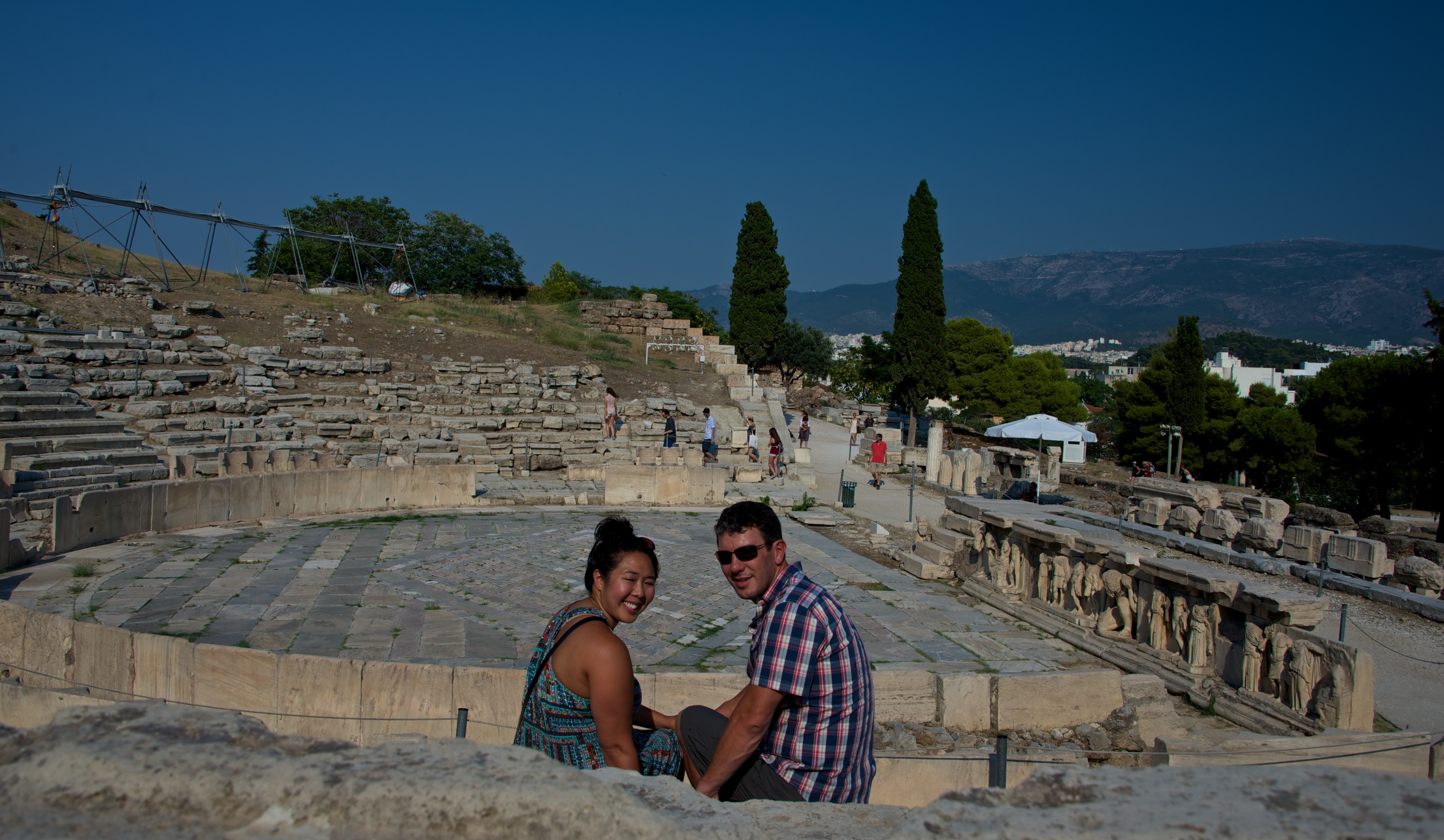
We entered at the South Slope of the Acropolis, and so our first big site was The Ancient Theatre of Dionysos.  It is the most ancient theatre in the world and saw the premiere performances of the plays from ancient Greek poets: Aeschylus, Aristophanes, Euripides, and Sophocles in 5th century BC.
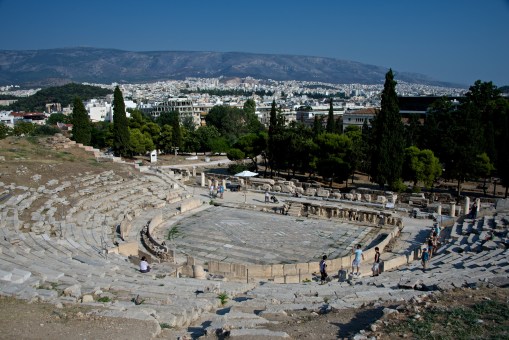
Photo 4

Ancient Theatre of Dionysos

Photo 3

There is something to be said for sitting in seats at the world’s most ancient theatre.
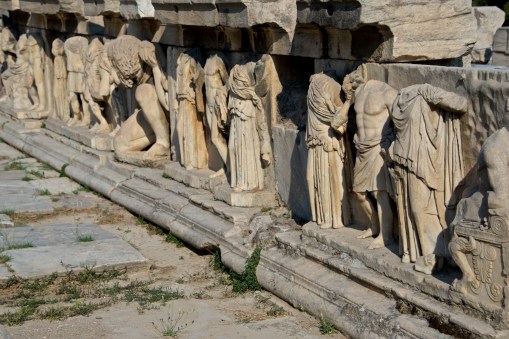
Photo 5

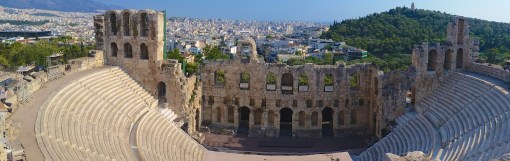
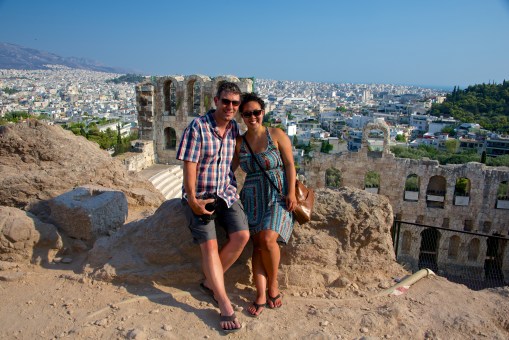
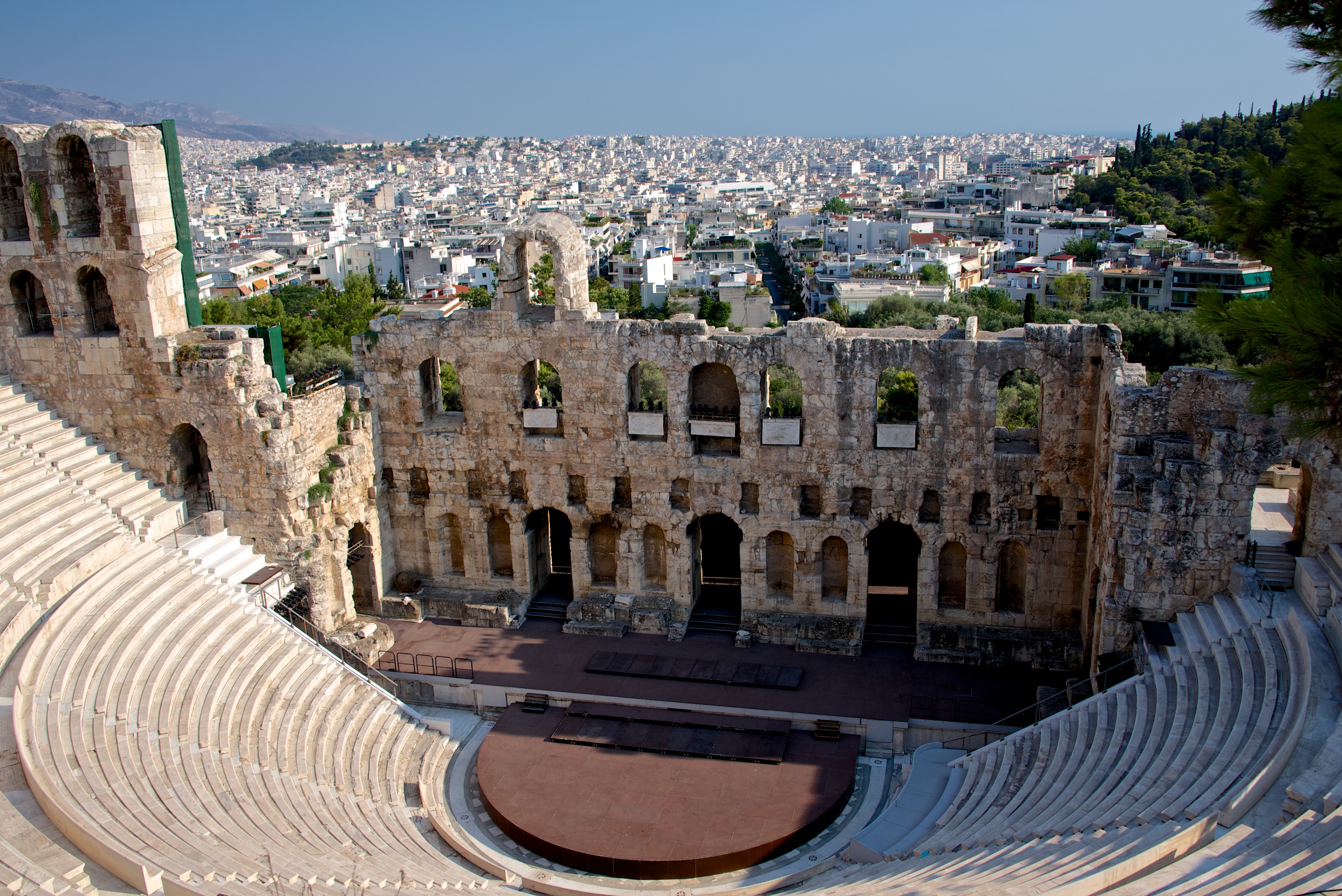
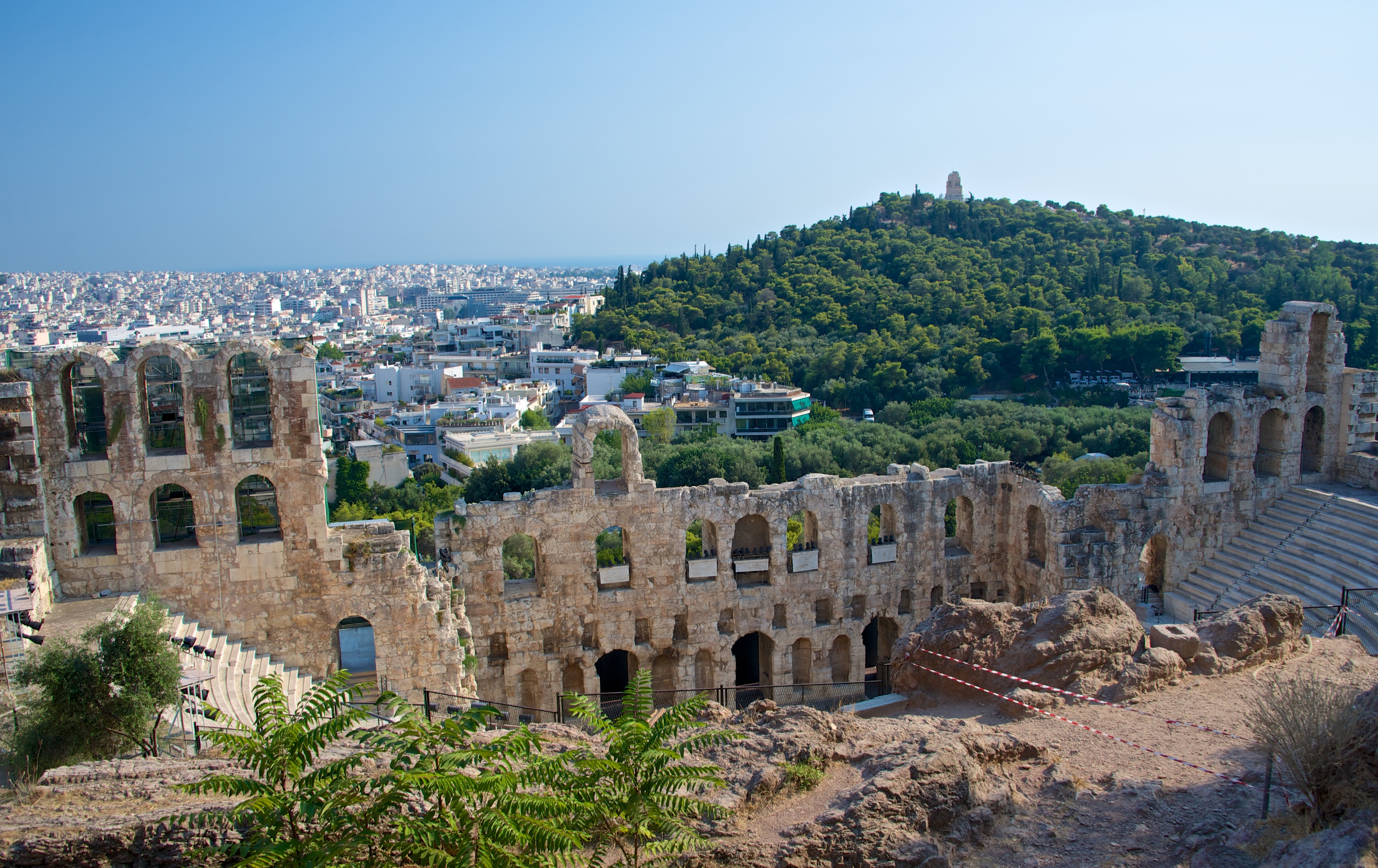
The Odeion on Herodes Atticus was built in 161 AD by Herodes Tiberius Claudius Atticus, a teacher and philosopher who inherited a fortune from his father.  To this day, this theatre is used as a venue for concerts during the Athens Festival – which would be a pretty cool experience.
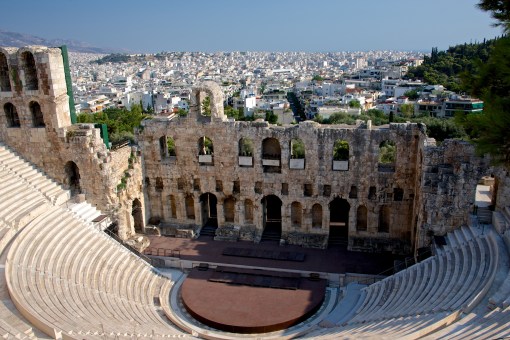
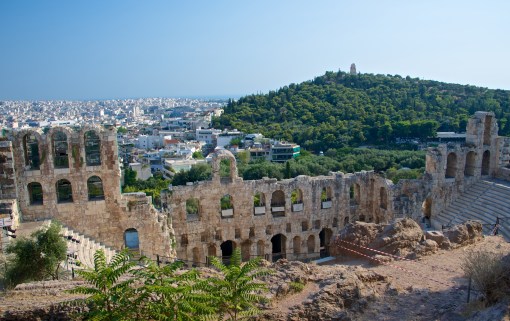
Photo 10

Photo 9

Photo (1)

Photo 12

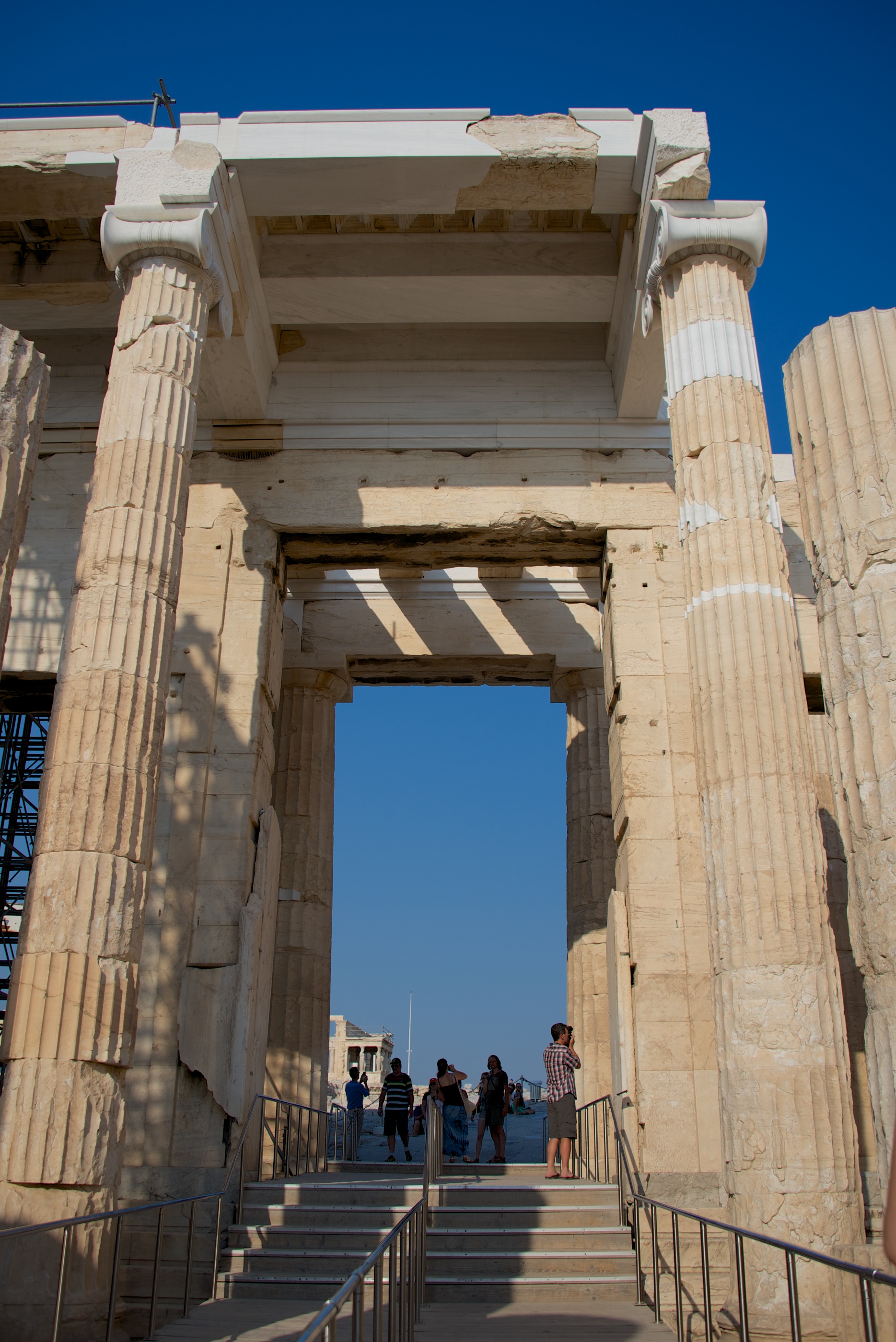
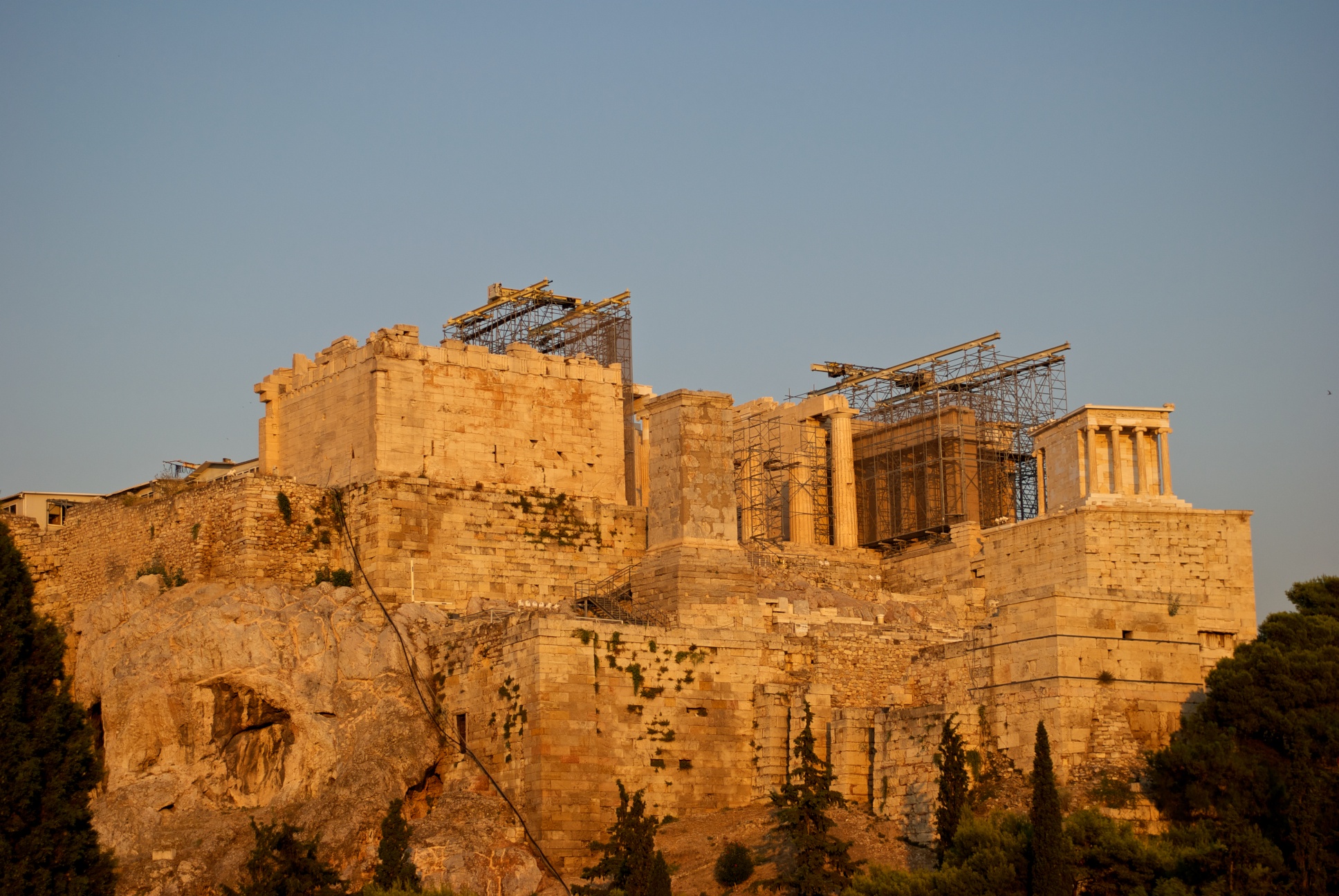
The Propylaia is the monumental gateway, and grand entrance to The Acropolis.
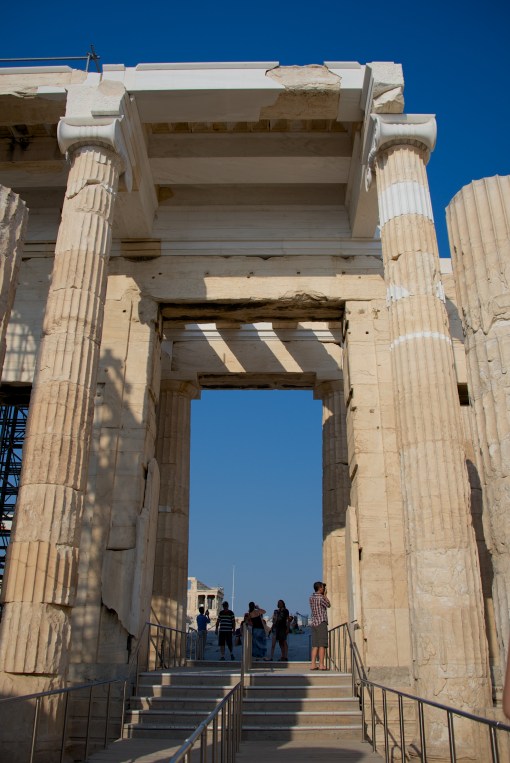
Photo 11

Built in 437 – 432 BC, it is made almost entirely of Pentelic marble.  Now, Pentelic marble is flawless white with a uniform, faint yellow tint that makes it shine golden in the sunlight (which makes it just lovely at sunset), and comes from Mount Penteli, which according to google maps is almost 15 miles away from the Acropolis.  Considering that the monuments, including the Parthenon, are all made of Pentelic marble, can you imagine what it would have taken to harvest all of the marble and move it that distance?! Crazy!
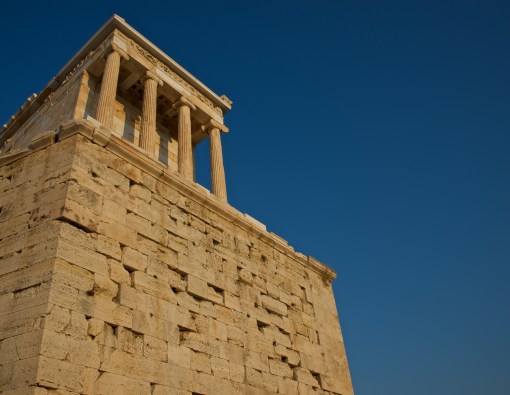
Photo 22

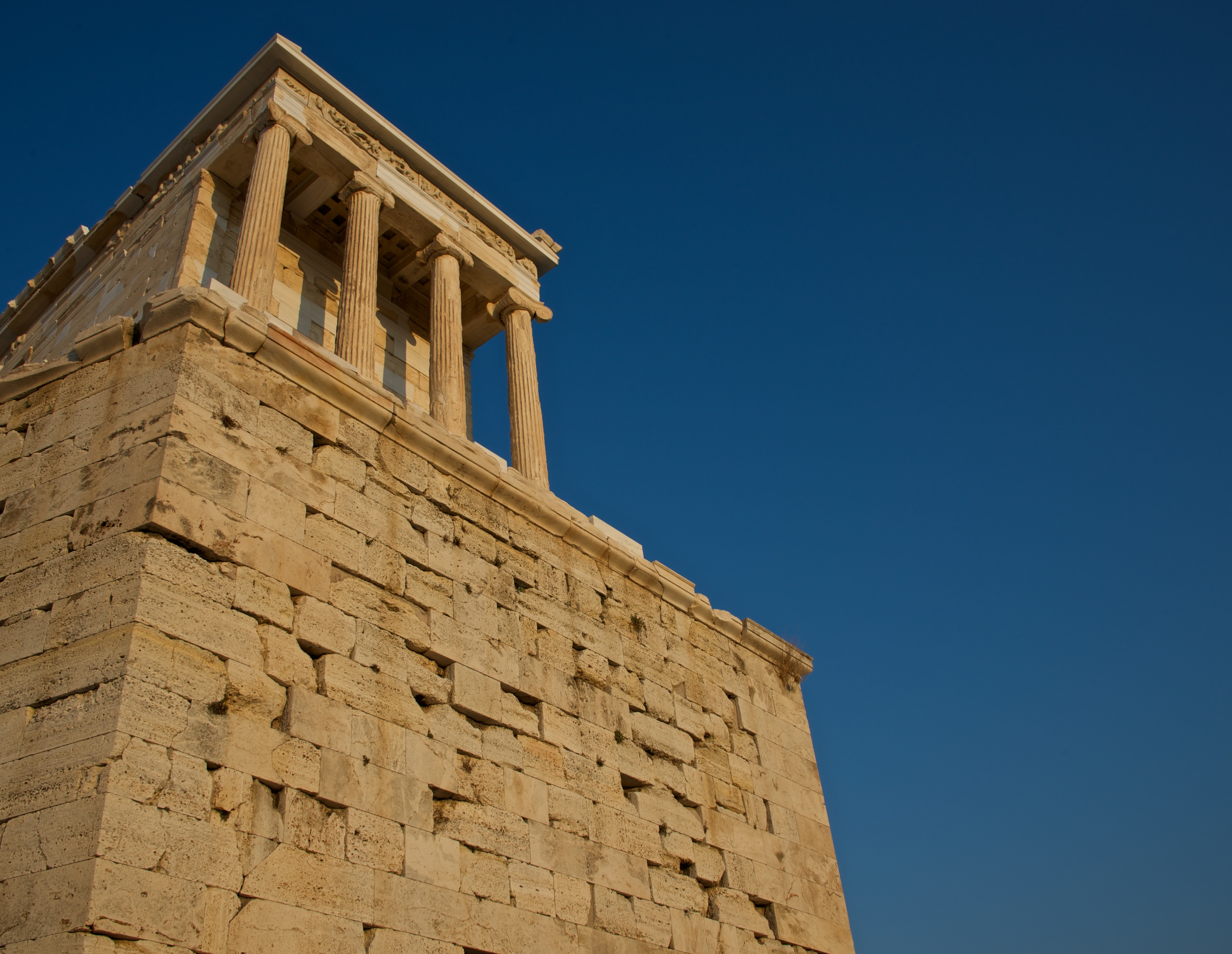
Temple of Athena Nike

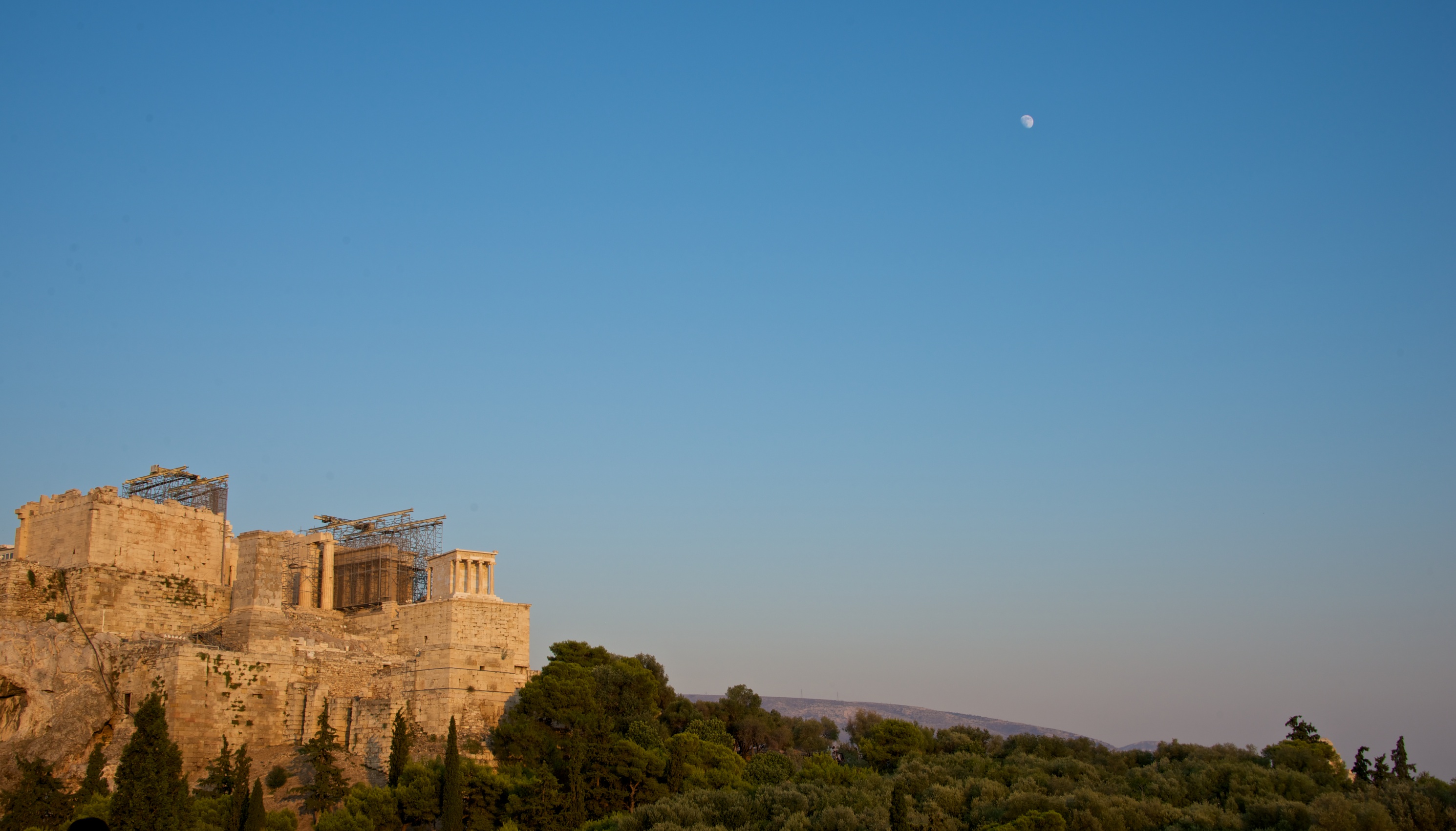
The Temple of Athena Nike showed its golden hue as the sun started to set during our visit.  Built in 421 BC, it commemorated the victory of the Athenians against the Persians.

As we passed through the Propylaia gateway, I could see the Parthenon up ahead to my left, but I felt like we had to delay the anticipation and leave the Grand Finale to the end, so we went ahead to the right.

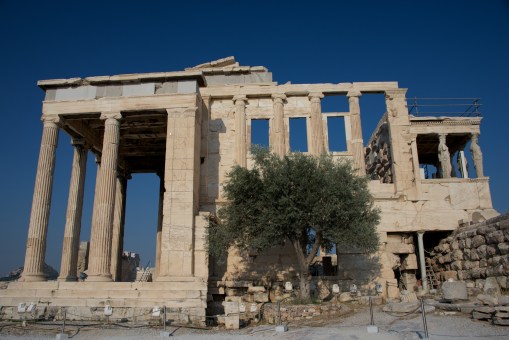
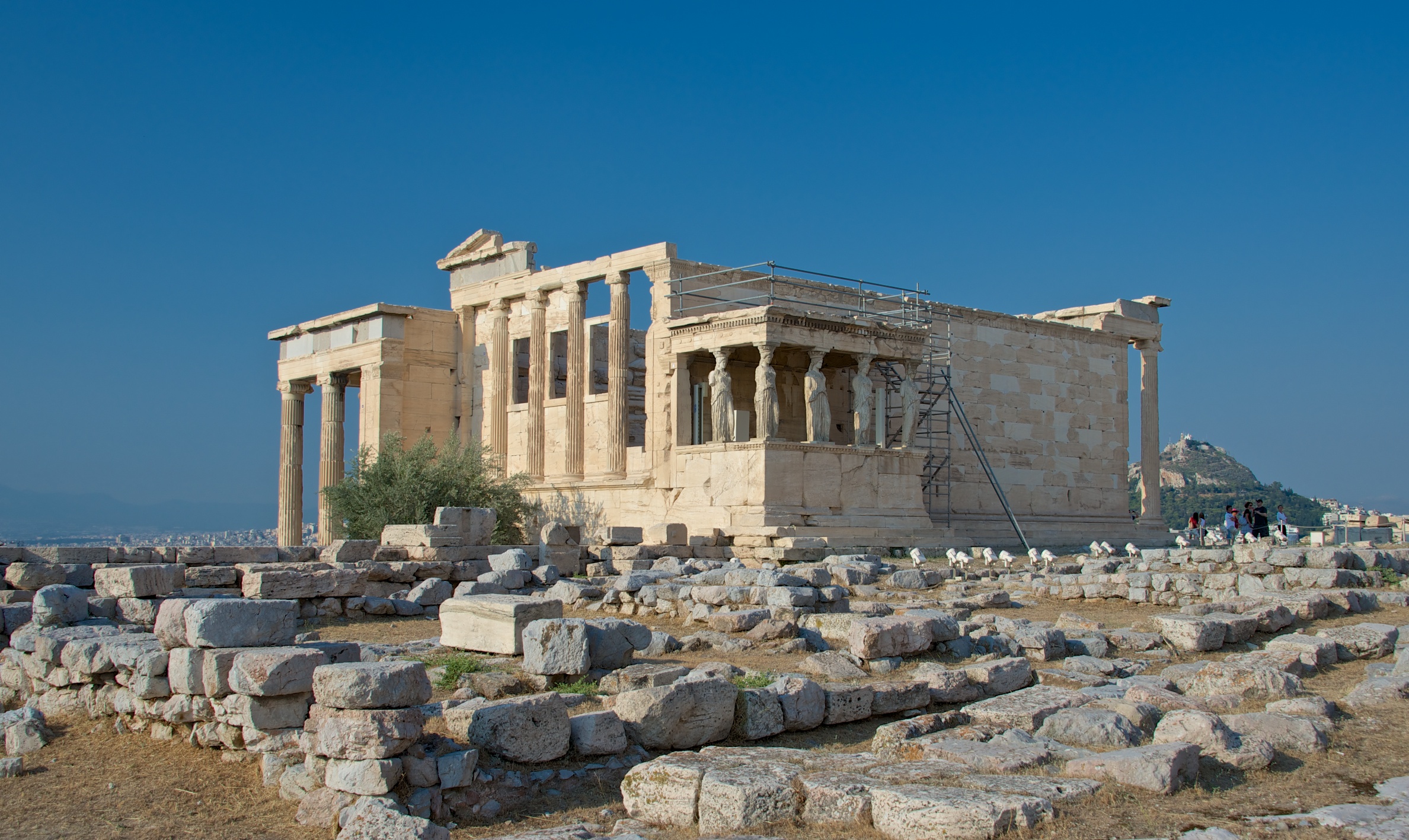
The Erechtheion was built between 421 and 406 BC at the most holy site of The Acropolis.  Athena and Poseidon both wanted to be the patron of Athens and it was decided that whoever gave the city the best gift would preside over the city and surrounding lands.  Poseidon struck the earth with his trident and a spring of salt water poured out of the ground.  Although impressed, the people were not that impressed when they tasted the salt water.  Athena’s gift was the Olive Tree, which ultimately won her the prize, and naming rights, since the people found value in the food (olives), oil and wood provided by her gift.

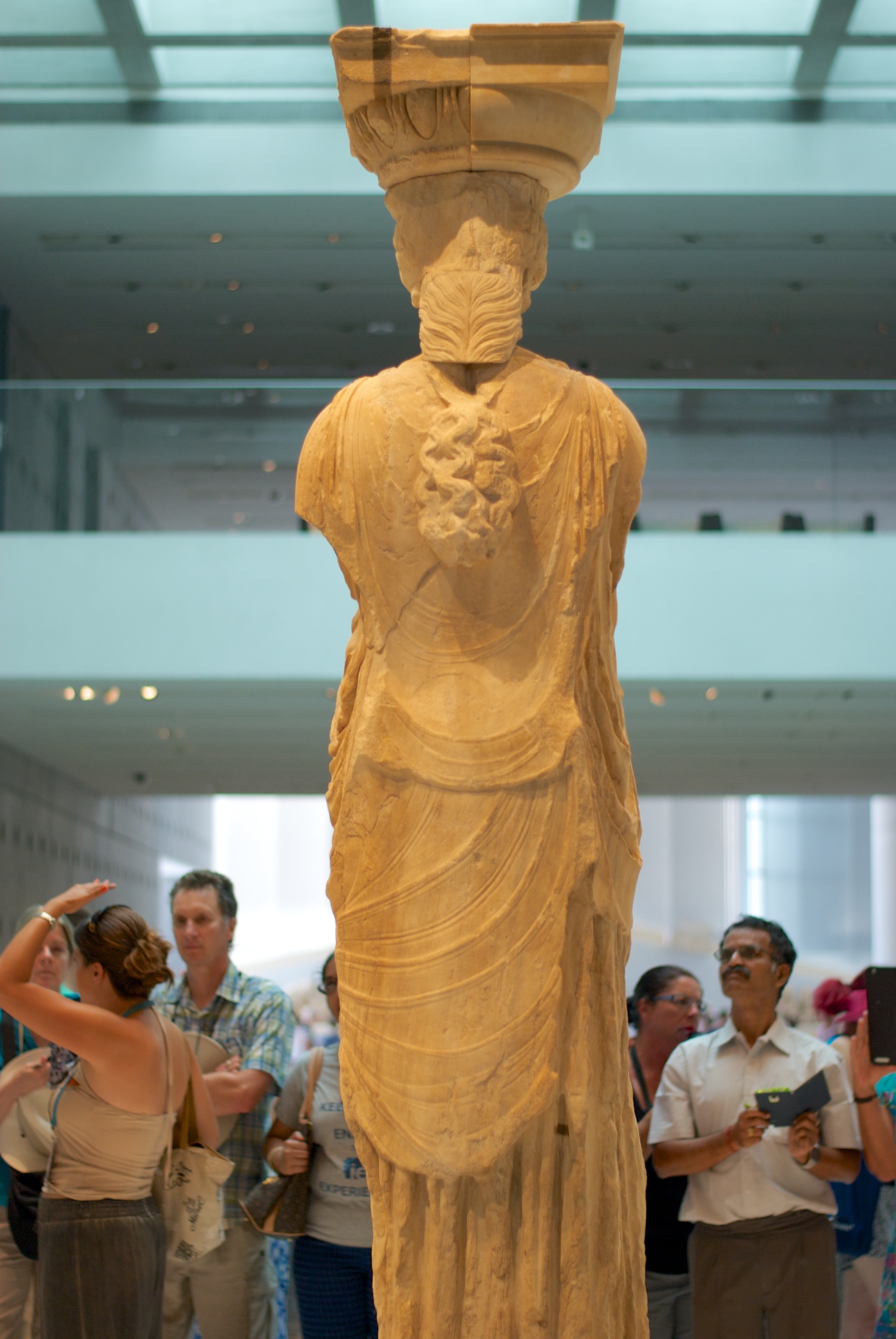
The site of The Erechtheion is said to be build where Poseidon struck the rock with his trident and Athena planted her olive tree.  The Western section dedicated to Poseidon, and the Eastern section, with its southern balcony featuring the 6 Caryatids, is dedicated to Athena.  And the olive tree growing on its left, although not the original olive tree, is said to have sprouted miraculously after the original olive tree was destroyed by the Persians at this very same spot.
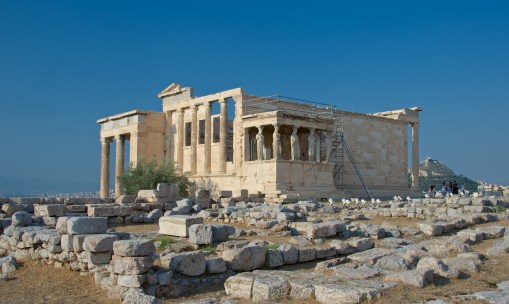
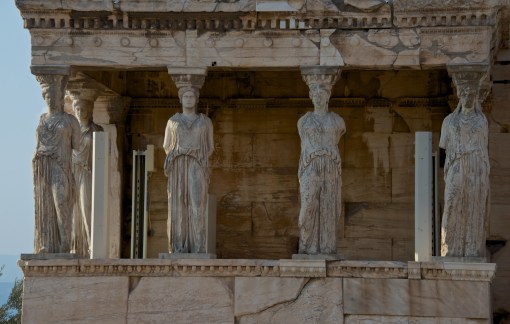
Photo 13

Photo 17

Photo 14

We wandered around looking at the view.  And I was also that person that was hovering around the water fountain, taking my turn guzzling straight from the source, rather than filling up a water bottle.   I don’t know why I even questioned bringing my water bottle, much less didn’t even buy one when we were at the bottom!  But just in case that happens to you too – there is a water fountain at the top.
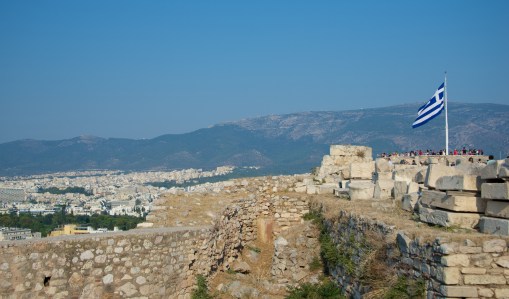
Photo 15

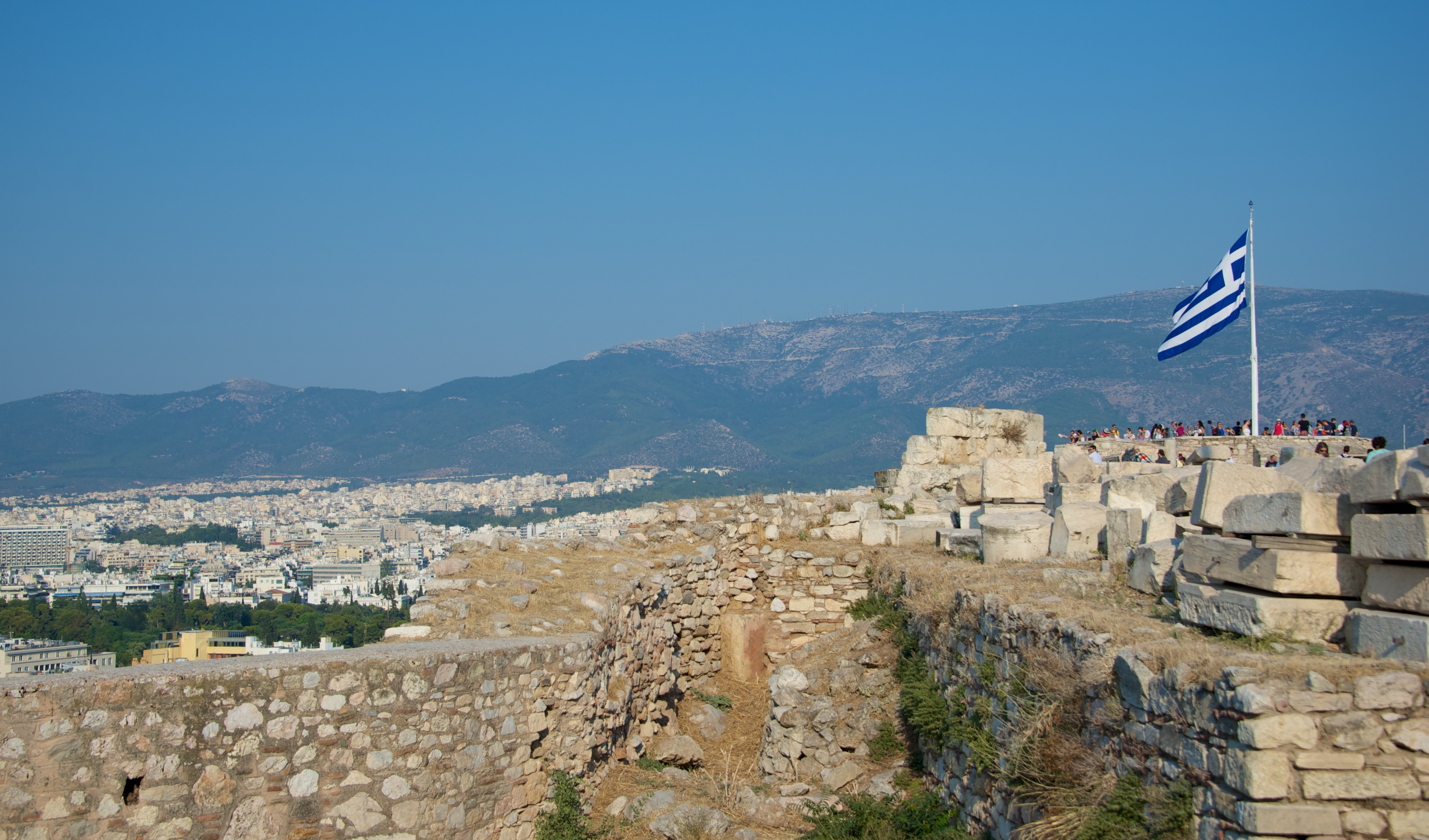
We could see the flag waving to us from our hotel rooftop terrace.
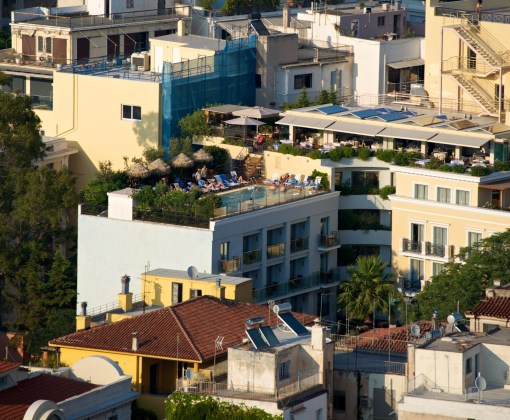
Photo 19

And oh look – there’s our roof top terrace!

And finally….The Parthenon! 

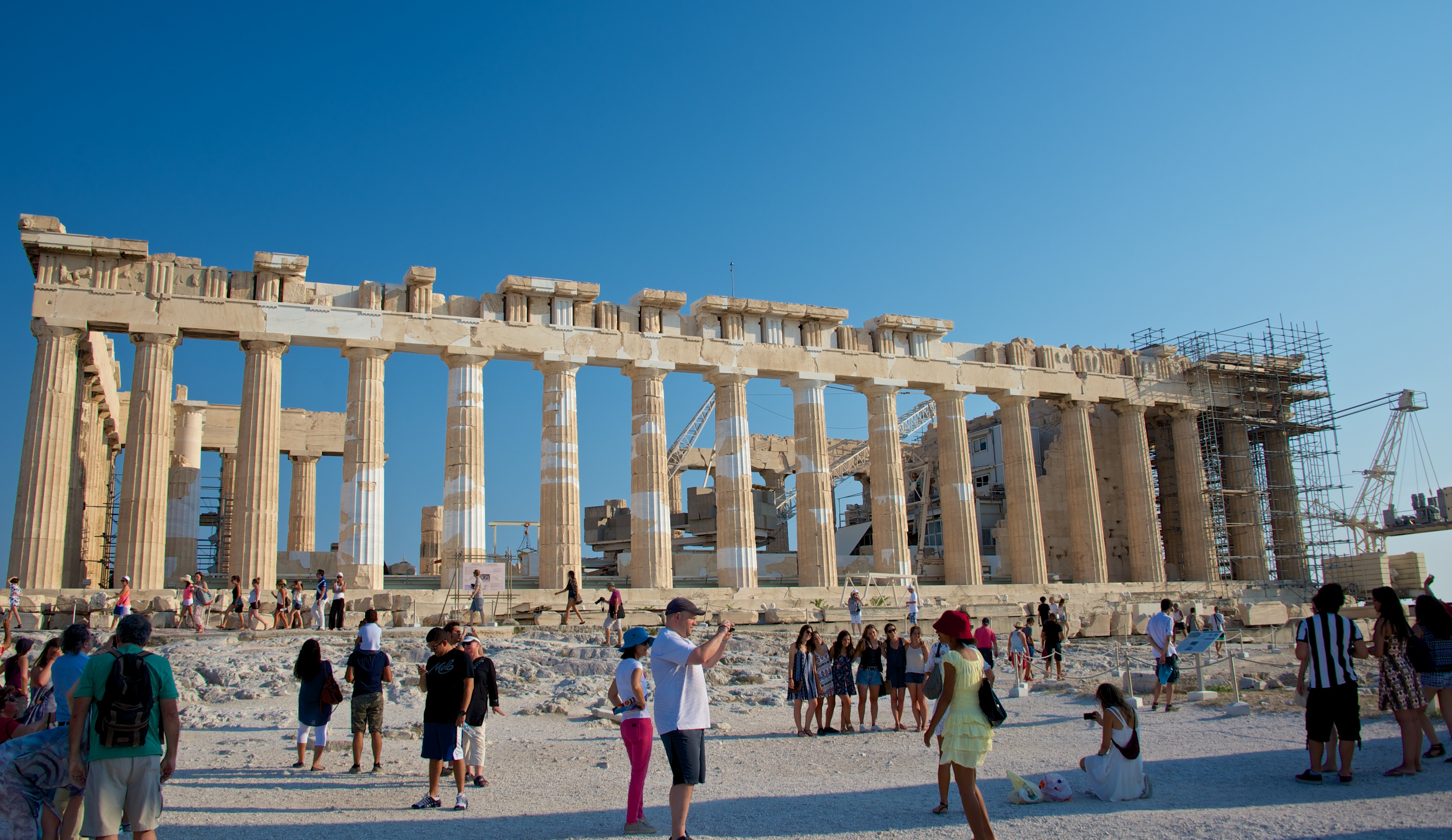
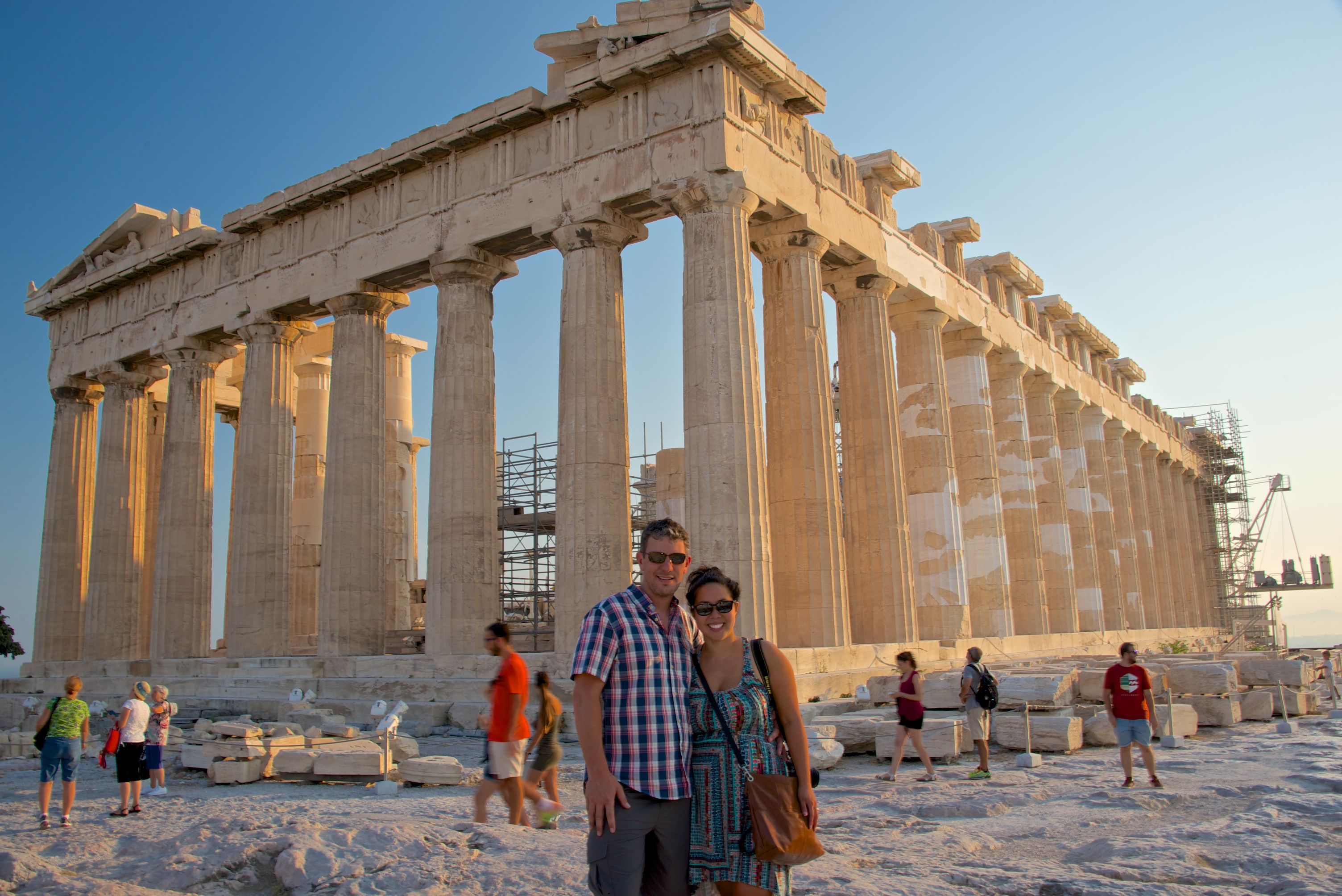
The Parthenon was a temple dedicated to Athena, built in 447-438 BC, and the most important surviving building of Classical Greece.   It is built from an estimated 13,400 blocks of Pentelic marble that was transported from the quarries on Mount Penteli.
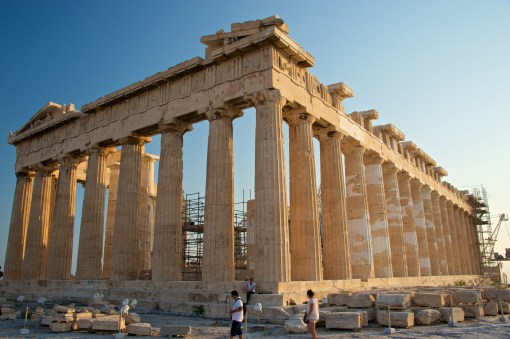
Photo 21

During the last 2,500 years, The Parthenon has endured many different transformations.  During the Roman Period, after acquiring many new votive offerings and statues, The Parthenon became a Christian cathedral and many statues and friezes were destroyed.  It was then turned into a Mosque during the Ottoman Period.  For the majority of its life, the building remained intact – a Doric peripteral temple with 8 columns on the front and 17 columns on each side, with no straight lines in its design, so the columns appear to bulge, as if straining from the weight.  It wasn’t until 1687, when the Venetians bombarded the Acropolis, causing an explosion that created the gap in the south side of The Parthenon, that the structure began to falter.  And in 1801-1812, Britain’s Lord Elgin, removed much of the sculptural decoration of the Parthenon, Temple of Athena Nike and the Erechtheion, including 1 Caryatid, which is presently displayed in the British Museum and the Greek government has been trying to bring back to Greece to be displayed with the other 5 original Caryatids at the Acropolis Museum (which is amazing by the way).
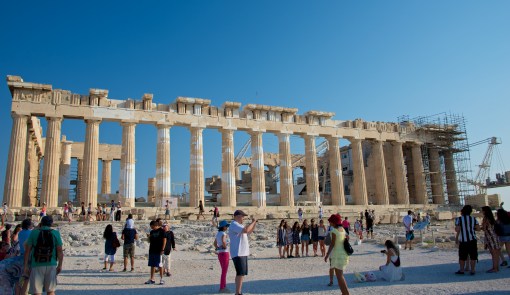
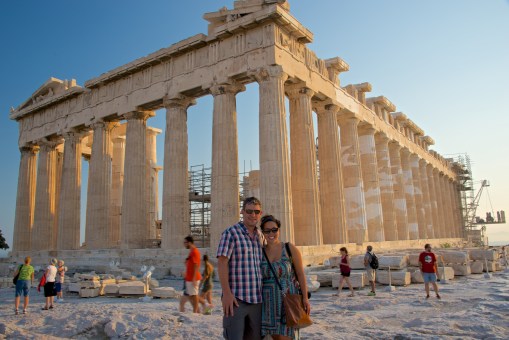
Photo 16

Photo

So there you have it.  Our tour of The Acropolis.  From 5:30PM – 7:30PM, we sweated under the setting sun, stirring up little clouds of dust under our feet.  But we didn’t have to deal with hoards of tour groups!
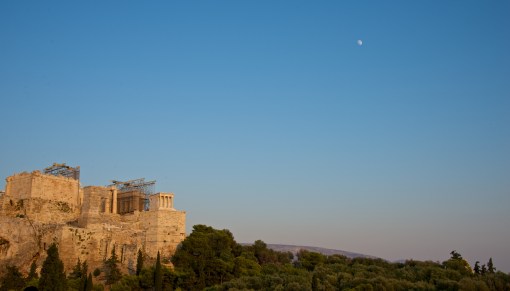
Photo 23

Photo 1

Photo 2


Greece It Is!
19 08 2015

It took me a little while, but I finally convinced Nathan that it was time to extend our travel outside of the US and Canada.  Don’t get me wrong, I love visiting Santa Fe, Vancouver, San Diego, NYC, Arizona, Hawaii! and there are still 9 states I have left to visit, but after 6 years, it’s time to spread our wings!
So it was Greece or New Zealand.  Those were the options I was given.  And since our travel plans were going to be in July, and New Zealand is in the midst of its winter – GREECE IT IS!

After months of reading travel sites and looking at maps, reading ‘top 10 things to do’ and ‘top things to eat’ lists, researching admission prices, operating hours, and loading up on euros after checking on the financial situation in Greece, we were finally ready for our trip.  Well, I can’t say that we were ready exactly, but it was time to go!

After a 15 hour travel day/night, we touched down around 10AM in Athens; a little bleary-eyed, a little frizzy-haired and just a little bit excited to be in Greece!

We stayed at the Electra Palace Hotel in the Plaka, the oldest neighborhood in Athens, and it proved to be a fantastic home base for our adventures the next few days.  Armed with a map, 2 cameras and the anticipation of a new city to discover, we headed out to explore….that is, after a much-needed 3 hour nap.

Photo 6

One of the most popular modes of transportation…especially for date night!

Photo 2

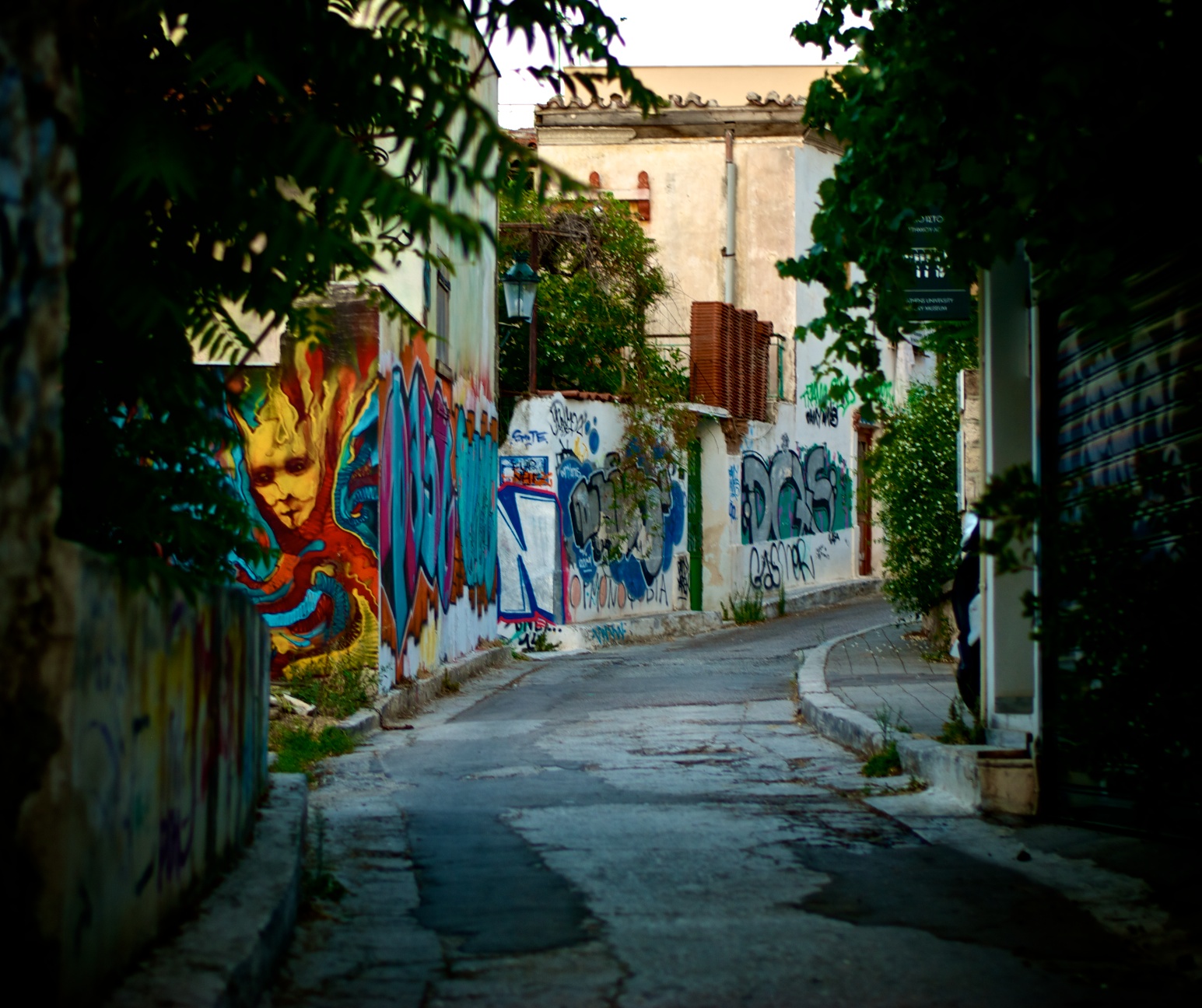
Was not expecting Athens to have so much graffiti

Photo 7

Streets of the Plaka with a view of Hadrian’s Arch